Advanced Acetylcholinesterase Biosensors for Ultra-Sensitive Pesticide Detection: Principles, Methods, and Innovations
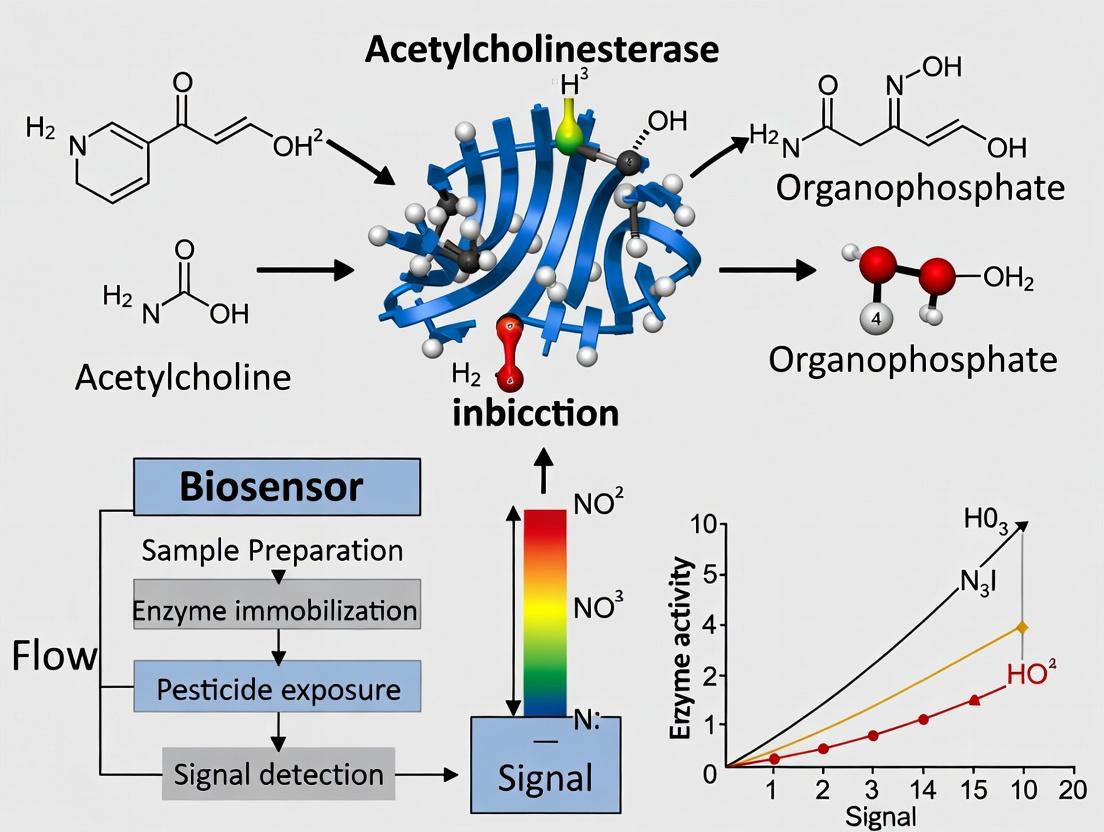
This article provides a comprehensive analysis of acetylcholinesterase (AChE)-based biosensors for pesticide detection, specifically targeting researchers, scientists, and drug development professionals.
Advanced Acetylcholinesterase Biosensors for Ultra-Sensitive Pesticide Detection: Principles, Methods, and Innovations
Abstract
This article provides a comprehensive analysis of acetylcholinesterase (AChE)-based biosensors for pesticide detection, specifically targeting researchers, scientists, and drug development professionals. It covers foundational biochemical principles, including the enzyme's structure-function relationship and inhibition mechanisms by organophosphates and carbamates. We detail cutting-edge methodological approaches such as nanomaterial-enhanced electrode fabrication, immobilization techniques, and transducer integration. The review addresses critical troubleshooting for sensitivity, stability, and interference issues, while offering optimization strategies for real-sample analysis. A comparative validation section evaluates performance metrics against traditional techniques like GC-MS and HPLC, and explores emerging trends. The synthesis aims to guide the development of next-generation, point-of-care diagnostic and environmental monitoring tools.
The Biochemical Blueprint: Understanding AChE Inhibition for Pesticide Sensing
Acetylcholinesterase (AChE) is a critical serine hydrolase that rapidly terminates synaptic neurotransmission at cholinergic synapses by hydrolyzing the neurotransmitter acetylcholine (ACh) into acetate and choline. Its unparalleled catalytic efficiency, nearing the diffusion limit, makes it essential for proper nervous system function. This application note details the structural and mechanistic basis of AChE function, protocols for its study, and its central role within the context of developing biosensors for the detection of organophosphate and carbamate pesticides. These pesticides act as irreversible or reversible inhibitors of AChE, and biosensors exploit this inhibition for quantitative detection.
Structure of Acetylcholinesterase
AChE belongs to the α/β hydrolase fold family. Its tertiary structure is characterized by a central 12-stranded mixed β-sheet surrounded by 14 α-helices. The active site is located near the bottom of a deep and narrow gorge, approximately 20Å deep, lined largely with aromatic residues.
Key Structural Features
- Catalytic Triad (CAS): Ser203, His447, and Glu334 (Torpedo californica numbering). Located at the base of the gorge.
- Acyl-Binding Pocket: A hydrophobic region near Ser203 that accommodates the acetyl moiety of ACh.
- Oxyanion Hole: Formed by the backbone NH groups of Gly121, Gly122, and Ala204; stabilizes the tetrahedral transition state.
- Choline-Binding Site (Anionic Site): Composed of Trp86, Glu202, and Tyr337; interacts with the quaternary ammonium group of choline and ACh via π-cation interactions.
- Peripheral Anionic Site (PAS): Situated at the rim of the gorge, involving Tyr72, Asp74, Trp286, and Tyr341. This site is involved in substrate guidance, allosteric modulation, and amyloid-beta peptide binding.
Table 1: Key Structural Residues of AChE (Torpedo californica)
| Residue Number | Residue Name | Functional Site | Role |
|---|---|---|---|
| Ser203 | Serine | Catalytic Triad (CAS) | Nucleophile; forms covalent acyl-enzyme intermediate. |
| His447 | Histidine | Catalytic Triad (CAS) | Acts as a general acid/base catalyst. |
| Glu334 | Glutamate | Catalytic Triad (CAS) | Orients His447 and stabilizes its protonated state. |
| Trp86 | Tryptophan | Choline-binding Site | π-cation interaction with substrate. |
| Glu202 | Glutamate | Choline-binding Site | May interact with the substrate. |
| Tyr337 | Tyrosine | Choline-binding Site | Substrate interaction. |
| Trp286 | Tryptophan | Peripheral Anionic Site (PAS) | Substrate guidance, allosteric modulation. Critical for biosensor inhibition kinetics. |
| Tyr72 | Tyrosine | Peripheral Anionic Site (PAS) | Substrate guidance. |
| Gly121, Gly122, Ala204 | Glycine, Alanine | Oxyanion Hole | Stabilize the transition state via H-bonding to the carbonyl oxygen. |
Catalytic Mechanism
The hydrolysis of ACh by AChE proceeds via a nucleophilic attack mechanism with a covalent acyl-enzyme intermediate.
Step 1: The substrate ACh binds, positioning its carbonyl carbon near the nucleophilic Ser203-OH. Step 2: His447, acting as a general base, deprotonates Ser203, enhancing its nucleophilicity. Step 3: Ser203-O⁻ attacks the carbonyl carbon of ACh, forming a tetrahedral transition state stabilized by the oxyanion hole. Step 4: The transition state collapses, releasing choline and forming a covalent acetyl-Ser203 intermediate. Step 5: A water molecule, activated by the now protonated His447 (general acid), hydrolyzes the acetyl-enzyme intermediate. Step 6: A second tetrahedral transition state forms and collapses, releasing acetate and regenerating the free enzyme.
Diagram Title: AChE Catalytic Hydrolysis Mechanism
Physiological Role and Relevance to Biosensor Development
AChE's primary physiological role is the precise, rapid clearance of ACh from synaptic clefts in the central and peripheral nervous systems, ensuring discrete signal transmission. Inhibition of AChE leads to accumulation of ACh, causing overstimulation of muscarinic and nicotinic receptors, resulting in paralysis, seizures, and death. Organophosphate (OP) and carbamate pesticides are potent AChE inhibitors. OPs form a stable, phosphorylated conjugate with the catalytic serine, while carbamates form a carbamylated intermediate with slower hydrolysis. Biosensors for pesticide detection leverage this inhibition principle. Enzyme activity is measured electrochemically (e.g., via thiocholine oxidation), and the degree of signal reduction correlates with inhibitor concentration.
Table 2: Comparison of AChE Inhibition by Key Pesticide Classes
| Inhibitor Class | Example Compounds | Mechanism of Inhibition | Reversibility | Biosensor Relevance |
|---|---|---|---|---|
| Organophosphates | Paraoxon, Chlorpyrifos | Phosphorylation of Ser203. | Irreversible (Aging) | High sensitivity; requires reactivators (e.g., oximes) for reusability. |
| Carbamates | Carbofuran, Carbaryl | Carbamylation of Ser203. | Slowly Reversible | Good sensitivity; sensor can self-regenerate after incubation. |
| Natural Toxins | Fasciculin | Non-competitive blockage of the active site gorge. | Reversible | Used as a selective tool in research. |
Experimental Protocols for Biosensor Research
Protocol: Colorimetric Ellman's Assay for AChE Activity and Inhibition Screening
Purpose: To determine AChE activity and measure inhibition constants (IC50) for pesticides. Principle: AChE hydrolyzes acetylthiocholine (ATCH) to thiocholine and acetate. Thiocholine reacts with 5,5'-dithio-bis-(2-nitrobenzoic acid) (DTNB) to produce 2-nitro-5-thiobenzoate (TNB⁻), a yellow-colored anion detectable at 412 nm.
Materials: See The Scientist's Toolkit (Section 7). Procedure:
- Prepare assay buffer (0.1 M Sodium Phosphate, pH 8.0).
- In a 96-well plate, add 140 µL of assay buffer to each well.
- Add 20 µL of AChE solution (0.1-0.5 U/mL final activity).
- Add 20 µL of inhibitor (pesticide) solution at varying concentrations or solvent control.
- Pre-incubate for 10-15 minutes at 25°C.
- Initiate the reaction by adding 20 µL of substrate mixture (containing ATCh and DTNB at final concentrations of 1 mM and 0.5 mM, respectively).
- Immediately start kinetic measurements, monitoring the increase in absorbance at 412 nm every 30 seconds for 5 minutes using a plate reader.
- Calculate activity as the rate of absorbance change (ΔA412/min). Percent inhibition = [1 - (Rateinhibited / Ratecontrol)] * 100%.
Protocol: Fabrication of a Basic Amperometric AChE Biosensor
Purpose: To construct an electrode for electrochemical detection of pesticide-induced AChE inhibition. Principle: AChE is immobilized on a working electrode. Hydrolysis of ATCh produces thiocholine, which is oxidized at the electrode surface (typically +0.4 to +0.6 V vs Ag/AgCl), generating a measurable current. Inhibition reduces this current.
Procedure:
- Electrode Preparation: Polish a glassy carbon (GC) electrode (3 mm diameter) with alumina slurry (0.3 µm and 0.05 µm), then rinse with distilled water and ethanol.
- Enzyme Immobilization (Chitosan/Cross-linking Method): a. Prepare a 5 µL mixture containing: 2 µL AChE (5 U/mL), 2 µL chitosan solution (1% w/v in 1% acetic acid), and 1 µL glutaraldehyde (0.25% v/v). b. Pipette the mixture onto the clean GC electrode surface. c. Allow to dry at 4°C for 2 hours. The cross-linked gel forms a stable enzyme layer.
- Electrochemical Measurement: a. Use a three-electrode system: modified GC as working electrode, Pt wire as counter electrode, Ag/AgCl as reference. b. Place electrodes in stirred 0.1 M PBS (pH 7.4) containing 1 mM ATCh. c. Apply a constant potential of +0.5 V and allow the oxidation current to stabilize. d. Record the steady-state current (I_0).
- Inhibition Measurement: a. Incubate the biosensor in a sample containing a known or unknown concentration of pesticide for 10 minutes. b. Rinse gently with buffer. c. Re-immerse in the ATCh/PBS solution and record the new steady-state current (Ii). d. The percent inhibition is calculated as [1 - (Ii / I_0)] * 100%. Calibrate with standard inhibitor solutions.
Diagram Title: AChE Biosensor Fabrication and Testing Workflow
Data Presentation: Kinetic Parameters
Table 3: Typical Kinetic Parameters for Acetylcholinesterase from Different Sources
| AChE Source | Km for ACh (µM) | kcat (s⁻¹) | kcat/Km (M⁻¹s⁻¹) | Biosensor Suitability Notes |
|---|---|---|---|---|
| Electrophorus electricus (Eel) | 80 - 100 | 1.4 x 10⁴ | ~1.8 x 10⁸ | High activity, commercially available; common standard. |
| Human (Recombinant) | 50 - 80 | 6.0 x 10³ | ~1.0 x 10⁸ | Highest relevance for toxicology studies; lower stability. |
| Drosophila melanogaster (Fruit Fly) | ~200 | 7.0 x 10³ | ~3.5 x 10⁷ | Used in insecticide resistance studies. |
The Scientist's Toolkit
Table 4: Key Reagents for AChE Activity and Inhibition Studies
| Reagent / Material | Function / Role | Example Supplier / Cat. No. |
|---|---|---|
| Acetylcholinesterase (Eel) | The enzyme catalyst for the hydrolysis reaction; the biorecognition element in the sensor. | Sigma-Aldrich, C3389 |
| Acetylthiocholine Iodide (ATCH) | Synthetic substrate; hydrolysis product (thiocholine) is electroactive. | Sigma-Aldrich, A5751 |
| 5,5'-Dithio-bis(2-nitrobenzoic acid) (DTNB, Ellman's Reagent) | Colorimetric detection reagent; reacts with thiocholine to form yellow TNB²⁻. | Sigma-Aldrich, D8130 |
| Paraoxon-ethyl | Standard organophosphate inhibitor for positive control and calibration. | Sigma-Aldrich, 36186 |
| 2-Pralidoxime (2-PAM) | Oxime reactivator; used to study reversibility of OP inhibition or regenerate OP-inhibited biosensors. | Sigma-Aldrich, 09920 |
| Polished Glassy Carbon Electrode | Transducer base for amperometric biosensors; provides a clean, reproducible surface for enzyme immobilization. | CH Instruments, CHI104 |
| Chitosan (low molecular weight) | Biopolymer for enzyme entrapment and immobilization on electrode surfaces. | Sigma-Aldrich, 448869 |
| Glutaraldehyde (25% solution) | Cross-linking agent; stabilizes the enzyme-polymer matrix on the sensor. | Sigma-Aldrich, G6257 |
Within the development of acetylcholinesterase (AChE)-based biosensors for rapid pesticide detection, understanding the inhibitory kinetics, reversibility, and molecular interactions of the two primary AChE inhibitor classes—Organophosphates (OPs) and Carbamates (CMs)—is paramount. This application note details their comparative biochemistry and provides standardized protocols for evaluating their effects, directly supporting biosensor characterization and assay optimization.
Comparative Biochemistry & Inhibition Kinetics
Table 1: Comparative Properties of OP and CM AChE Inhibitors
| Property | Organophosphates (OPs) | Carbamates (CMs) |
|---|---|---|
| General Structure | Phosphoric or phosphorothioic acid esters | Carbamic acid esters |
| Inhibition Mechanism | Irreversible phosphorylation of serine in AChE active site | Reversible carbamylation of serine in AChE active site |
| Binding Covalency | Stable covalent bond (P-O-Ser) | Labile covalent bond (C-O-Ser) |
| Aging | Yes. Dealkylation leads to irreversibly inhibited enzyme. | No. Spontaneous hydrolysis restores activity. |
| Inhibition Rate Constant (kᵢ) | ~10² to 10⁵ M⁻¹min⁻¹ (slower onset) | ~10⁴ to 10⁷ M⁻¹min⁻¹ (rapid onset) |
| Spontaneous Reactivation | Negligible (very slow, days) | Rapid (minutes to hours) |
| Therapeutic Antidote | Oximes (e.g., 2-PAM) required for reactivation | Oximes generally not recommended (may interfere) |
| Example Compounds | Paraoxon, Malathion, Chlorpyrifos-oxon | Carbofuran, Aldicarb, Propoxur |
Experimental Protocols for Biosensor Research
Protocol 1: In vitro Determination of Inhibition Constants for AChE Biosensor Calibration
Objective: To determine the bimolecular inhibition rate constant (kᵢ) and IC₅₀ for an OP or CM using a purified AChE source.
Materials: See "Research Reagent Solutions" below. Workflow:
- Prepare 1 nM purified AChE (e.g., from Electrophorus electricus) in 0.1 M phosphate buffer (pH 7.4).
- Prepare a serial dilution of inhibitor (OP/CM) in buffer (e.g., 10⁻¹² to 10⁻⁶ M).
- Pre-incubation: Mix 490 µL AChE solution with 10 µL of each inhibitor dilution. Incubate at 25°C for a fixed time (t, e.g., 10 min).
- Residual Activity Assay: Transfer 100 µL of the pre-incubation mix to a cuvette containing 890 µL buffer and 10 µL of 10 mM DTNB. Initiate reaction by adding 10 µL of 75 mM ATCh. Mix immediately.
- Measurement: Monitor absorbance at 412 nm for 2 min. Calculate reaction velocity (ΔA/min).
- Data Analysis:
- Plot % residual activity vs. log[inhibitor] to determine IC₅₀.
- For kᵢ: Perform pre-incubation at multiple time points. Plot ln(residual activity) vs. pre-incubation time for each [I]. Slope = kₒbₛ = kᵢ[I] + kᵣ. Plot kₒbₛ vs. [I]; slope = kᵢ.
Protocol 2: Assessing Inhibitor Reversibility for Biosensor Regeneration
Objective: To distinguish irreversible (OP) from reversible (CM) inhibition and test biosensor regeneration protocols.
Materials: As per Protocol 1. Workflow:
- Inhibit AChE as in Protocol 1 using a concentration yielding ~90% inhibition. Incubate for 10 min.
- Dilution Method: Dilute the inhibition mixture 100-fold in buffer to reduce [I] dramatically.
- Incubate the diluted sample at 25°C. Withdraw aliquots at t=0, 30, 60, 120 min.
- Assay residual AChE activity immediately for each time point (as in Protocol 1, step 4-5).
- Analysis: Plot % initial activity vs. post-dilution time. CMs show significant recovery; OPs show minimal recovery. Fit data to a first-order recovery model to obtain reactivation half-life for CMs.
Visualization of Pathways and Workflows
Diagram Title: AChE Inhibition & Reactivation Pathways by OP vs. CM
Diagram Title: Experimental Workflow for AChE Inhibitor Assay
The Scientist's Toolkit: Research Reagent Solutions
Table 2: Essential Reagents for AChE Inhibition Studies
| Reagent/Material | Function & Rationale |
|---|---|
| Purified AChE (e.g., from electric eel or recombinant human) | The biosensor's recognition element. Source and isoform affect inhibitor sensitivity. |
| Acetylthiocholine (ATCh) Iodide | Substrate. Hydrolysis by AChE produces thiocholine. |
| 5,5'-Dithio-bis-(2-nitrobenzoic acid) (DTNB, Ellman's Reagent) | Colorimetric agent. Reacts with thiocholine to produce yellow 2-nitro-5-thiobenzoate (TNB), measured at 412 nm. |
| Organophosphate Standard (e.g., Paraoxon-ethyl) | Model irreversible inhibitor for biosensor calibration. Handle with extreme toxicity precautions. |
| Carbamate Standard (e.g., Carbofuran) | Model reversible inhibitor for biosensor calibration. Toxic. |
| 2-Pralidoxime (2-PAM) | Oxime reactivator used in OP poisoning and to test biosensor regeneration. |
| Phosphate Buffer (0.1 M, pH 7.4) | Maintains physiological pH for optimal AChE activity and stability. |
| Microplate Reader or Spectrophotometer | For high-throughput or cuvette-based kinetic absorbance measurements. |
| Immobilization Chemistries (e.g., glutaraldehyde, NHS-EDC, SAMs) | For covalently attaching AChE to transducer surfaces in biosensor fabrication. |
This document provides application notes and protocols for characterizing acetylcholinesterase (AChE) inhibition, a critical principle underpinning biosensors for organophosphate and carbamate pesticide detection. Distinguishing between irreversible (e.g., organophosphates) and reversible (e.g., carbamates, some drugs) inhibition is paramount for assay development, sensor regeneration strategies, and environmental monitoring.
Core Kinetic Principles & Quantitative Comparison
Table 1: Key Characteristics of Irreversible vs. Reversible AChE Inhibition
| Parameter | Reversible Inhibition (e.g., Carbamates) | Irreversible Inhibition (e.g., Organophosphates) |
|---|---|---|
| Binding Nature | Non-covalent, equilibrium-driven | Covalent, time-dependent inactivation |
| Enzyme Recovery | Spontaneous upon inhibitor removal (dialyzable) | No recovery; requires de novo enzyme synthesis or chemical reactivation (e.g., oximes) |
| Kinetic Impact | Alters apparent Km and/or Vmax | Progressively decreases active enzyme concentration [E], reducing Vmax |
| Inhibition Constant | KI (Dissociation constant) | ki (rate constant for inactivation), t1/2 (inactivation half-life) |
| Diagnostic Plot | Lineweaver-Burk (double-reciprocal) shows distinct patterns for competitive, non-competitive, uncompetitive. | Kitz-Wilson plot (ln(residual activity) vs. time) is linear. |
| Biosensor Implication | Sensor may be regenerated by buffer wash. | Sensor is typically single-use or requires harsh chemical regeneration. |
Table 2: Typical Kinetic Data for AChE Inhibitors (Exemplar Values)
| Inhibitor | Class | Apparent KI (M) | Inactivation Rate Constant, ki (M⁻¹min⁻¹) | Half-life (t1/2) at 1 µM Inhibitor |
|---|---|---|---|---|
| Physostigmine | Carbamate (Reversible) | 1.0 x 10⁻⁷ | Not Applicable | ~10 min (reversible) |
| Paraoxon | Organophosphate (Irreversible) | Not Applicable | 5.0 x 10⁵ | < 0.01 min |
| Malathion | Organophosphate (Irreversible) | Not Applicable | 2.5 x 10³ | ~2.8 min |
Experimental Protocols
Protocol 1: Distinguishing Reversible vs. Irreversible Inhibition via Dilution
Objective: To determine if AChE inhibition is reversible by assessing recovery of enzyme activity after drastic dilution.
Materials: Purified AChE (e.g., from Electrophorus electricus), inhibitor stock solution (e.g., carbaryl and paraoxon), acetylthiocholine (ATCH), 5,5'-dithio-bis-(2-nitrobenzoic acid) (DTNB, Ellman's reagent), phosphate buffer (0.1 M, pH 8.0), spectrophotometer.
Procedure:
- Pre-inhibition: Prepare two identical 1 mL reaction mixtures containing AChE (0.1 U/mL) in buffer. Add inhibitor to one (experimental) to achieve 90% inhibition. Add solvent only to the other (control). Incubate for 10 min at 25°C.
- Dilution: Dilute both mixtures 100-fold with fresh buffer.
- Activity Assay: Immediately after dilution, take 100 µL from each diluted mixture and add to a cuvette containing 890 µL buffer, 10 µL DTNB (10 mM), and 10 µL ATCh (100 mM). Mix.
- Measurement: Monitor the increase in absorbance at 412 nm for 2 min. The rate of color change (ΔA412/min) is proportional to enzyme activity.
- Analysis: Calculate % activity recovery: (Activityexperimental / Activitycontrol) * 100%. Recovery >80% suggests reversible inhibition. Recovery <20% suggests irreversible inhibition.
Protocol 2: Kitz-Wilson Plot for Irreversible Inhibition Kinetics
Objective: To determine the inactivation rate constant (ki) for an irreversible inhibitor like paraoxon.
Materials: As in Protocol 1.
Procedure:
- Time-Course Inactivation: Prepare a master mix of AChE in buffer. Aliquot into multiple tubes. Initiate inactivation by adding a fixed concentration of paraoxon [I] to each tube. For a control tube, add solvent only.
- Sampling: At predetermined time intervals (e.g., 0, 1, 2, 5, 10, 15 min), remove an aliquot from a tube and immediately dilute it 50-fold into the assay cuvette containing DTNB and a high, saturating concentration of ATCh substrate. This drastic dilution halts further inactivation.
- Residual Activity: Immediately measure the initial rate of the chromogenic reaction (v_t) as in Protocol 1.
- Data Analysis:
- Plot ln(vt / v0) versus time (t), where v0 is the activity of the uninhibited control. This should yield a straight line.
- The slope of this line equals -kobs, where kobs = ki * [I].
- Perform the experiment with 3-4 different inhibitor concentrations [I].
- Plot kobs versus [I]. The slope of this secondary plot is the second-order rate constant ki.
Visualization: Workflows and Mechanisms
Title: Workflow to Diagnose Irreversible AChE Inhibition
Title: Reversible vs Irreversible Inhibition Mechanism in AChE Biosensors
The Scientist's Toolkit: Research Reagent Solutions
Table 3: Essential Materials for AChE Inhibition Kinetics Studies
| Item | Function & Relevance | Example Product/Catalog |
|---|---|---|
| Acetylcholinesterase (AChE) | Target enzyme. Source (electric eel, human recombinant) affects sensitivity to different inhibitors. | Sigma-Aldrich C3389 (Type VI-S, E. electricus) |
| Acetylthiocholine (ATCH) Iodide | Substrate. Hydrolyzed by AChE to thiocholine and acetate. | Sigma-Aldrich A5751 |
| DTNB (Ellman's Reagent) | Chromogen. Reacts with thiocholine product to form yellow 5-thio-2-nitrobenzoate (TNB), measurable at 412 nm. | Thermo Fisher Scientific 22582 |
| Organophosphate Inhibitor Standard | Positive control for irreversible inhibition. EXTREME CAUTION: Highly toxic. | ChemService PS-895 (Paraoxon-ethyl) |
| Carbamate Inhibitor Standard | Positive control for reversible inhibition. | Sigma-Aldrich C9895 (Carbaryl) |
| 2-PAM (Pralidoxime) | Oxime reactivator. Used to confirm irreversible inhibition by attempting to restore activity of phosphorylated AChE. | Sigma-Aldrich 57900 |
| 96-well Microplate (UV-transparent) | For high-throughput kinetic assays and inhibitor screening. | Corning 3635 |
| Multi-mode Microplate Reader | To measure absorbance (412 nm) or fluorescence kinetics in a high-throughput format. | SpectraMax M5e |
The detection of bioactive molecules, particularly toxins like organophosphate and carbamate pesticides, has evolved dramatically. The foundational methodology relied on colorimetric assays using acetylcholinesterase (AChE) and its substrate, acetylcholine, or analogous chromogenic compounds like acetylthiocholine. The principle hinges on AChE's enzymatic activity: hydrolysis of the substrate produces a product (thiocholine or acetic acid) that reacts with an indicator (e.g., Ellman's reagent, DTNB) to yield a colored complex measurable by spectrophotometry. Inhibition of AChE by pesticides reduces color development, providing an indirect quantitative measure of the toxin.
Modern biosensor concepts have transformed this approach by integrating the biological recognition element (AChE) directly with a physicochemical transducer (electrochemical, optical, piezoelectric). This fusion enables real-time, sensitive, portable, and often label-free detection, moving from benchtop assays to point-of-need analytical devices. This evolution frames the core thesis: advancing AChE-based biosensor design for rapid, ultra-sensitive, and field-deployable pesticide detection.
Application Notes & Comparative Analysis
Table 1: Evolution of AChE-Based Detection Methodologies
| Era | Methodology | Key Principle | Typical LOD for Paraoxon | Assay Time | Advantages | Limitations |
|---|---|---|---|---|---|---|
| Classical (1960s-) | Colorimetric (Ellman's) | Spectrophotometric detection of TNB²⁻ from ATCh + DTNB | 10⁻⁷ – 10⁻⁸ M | 30-60 min | Well-established, low-cost reagents | Bulky instrumentation, low throughput, indirect, prone to interference |
| Transitional (1990s-) | Microplate-Based Assay | High-throughput version of colorimetric/fluorimetric assay | 10⁻⁸ – 10⁻⁹ M | 15-30 min | Higher throughput, smaller sample volumes | Requires lab infrastructure, not field-deployable |
| Modern (2000s-) | Electrochemical Biosensor | Amperometric detection of thiocholine oxidation at modified electrode | 10⁻⁹ – 10⁻¹² M | 3-10 min | High sensitivity, portability, rapid, low sample volume | Enzyme stability, electrode fouling, requires calibration |
| Advanced (2010s-) | Nanomaterial-Enhanced Biosensor | AChE immobilized on CNTs, graphene, or NPs for signal amplification | 10⁻¹² – 10⁻¹⁵ M | 2-5 min | Ultra-high sensitivity, stability, lower detection limits | Nanomaterial synthesis, reproducibility challenges |
| Cutting-Edge (2020s-) | Wearable/Paper-Based Sensor | AChE integrated into inkjet-printed electrodes or paper microfluidics | 10⁻⁹ – 10⁻¹¹ M | <5 min | Extreme portability, disposability, low cost | Semi-quantitative, shorter shelf-life |
Table 2: Performance Metrics of Recent AChE Biosensor Platforms (2020-2024)
| Biosensor Platform (Transducer) | Immobilization Matrix | Linear Range (M) | LOD for Paraoxon (M) | Stability (4°C) | Reference (Example) |
|---|---|---|---|---|---|
| AuNPs/Chitosan/GCE (Amperometric) | Chitosan-Crosslinked | 1.0×10⁻¹³ – 1.0×10⁻⁸ | 3.2×10⁻¹⁴ | 28 days (>85%) | Anal. Chem., 2022 |
| MoS₂/GO Nanocomposite (Voltammetric) | Nafion | 1.0×10⁻¹² – 1.0×10⁻⁹ | 5.0×10⁻¹³ | 30 days (>90%) | Biosens. Bioelectron., 2023 |
| Cellulose Paper/CNT (Colorimetric) | Adsorption | 1.0×10⁻⁸ – 1.0×10⁻⁵ | 8.7×10⁻⁹ | 14 days (>80%) | Sens. Actuators B, 2023 |
| FET with AChE-functionalized (Impedimetric) | SAM (Cysteamine) | 1.0×10⁻¹⁵ – 1.0×10⁻¹¹ | 2.1×10⁻¹⁶ | 21 days (>80%) | ACS Nano, 2024 |
| 3D-Printed Electrode (Amperometric) | Polypyrrole Gel | 1.0×10⁻¹⁰ – 1.0×10⁻⁷ | 7.5×10⁻¹¹ | 60 days (>95%) | Adv. Funct. Mater., 2024 |
Detailed Experimental Protocols
Protocol 1: Classical Ellman's Colorimetric Assay for AChE Inhibition
Purpose: To establish a baseline inhibition curve for an organophosphate pesticide using a standard colorimetric method. Principle: AChE hydrolyzes acetylthiocholine (ATCh) to thiocholine and acetate. Thiocholine reduces DTNB (5,5'-dithio-bis-(2-nitrobenzoic acid)), producing the yellow-colored 5-thio-2-nitrobenzoate ion (TNB²⁻), measurable at 412 nm. Inhibitor presence reduces the rate of TNB²⁻ formation.
Materials: See "The Scientist's Toolkit" (Section 5). Procedure:
- Solution Preparation:
- Phosphate Buffer (0.1 M, pH 8.0): Prepare 100 mL.
- DTNB (10 mM): Dissolve 39.6 mg DTNB in 10 mL phosphate buffer.
- ATCh (75 mM): Dissolve 16.1 mg acetylthiocholine iodide in 1 mL DI water.
- AChE Solution (0.5 U/mL): Dilute electric eel AChE stock in cold phosphate buffer.
- Inhibitor Stock (1 mM Paraoxon): Prepare in acetone. Serially dilute in phosphate buffer for calibration.
Inhibition Assay (in triplicate): a. In a 1 mL cuvette, add 700 µL phosphate buffer. b. Add 100 µL of DTNB solution. c. Add 100 µL of AChE solution (0.5 U/mL). Mix gently. d. For inhibition samples: Pre-incubate the AChE (step c) with 50 µL of pesticide standard (or sample) for 10 minutes at 25°C before adding DTNB and proceeding. e. Initiate the reaction by adding 100 µL of ATCh substrate solution. Mix immediately. f. Monitor the increase in absorbance at 412 nm for 3 minutes (take readings every 30 sec) using a spectrophotometer. g. Calculate the reaction rate (ΔA/min) from the linear portion of the curve.
Data Analysis:
- Control Activity (v₀): Average rate of uninhibited reaction (no pesticide).
- Inhibited Activity (vᵢ): Rate in the presence of pesticide.
- % Inhibition = [1 - (vᵢ / v₀)] × 100.
- Plot % Inhibition vs. log[Pesticide] to generate an IC₅₀ curve.
Protocol 2: Fabrication and Measurement of a Nanocomposite Amperometric AChE Biosensor
Purpose: To construct a sensitive, nanomaterial-enhanced electrochemical biosensor for pesticide detection. Principle: AChE is immobilized on a carbon electrode modified with multi-walled carbon nanotubes (MWCNTs) and gold nanoparticles (AuNPs). Enzymatic hydrolysis of ATCh produces thiocholine, which is oxidized at a low applied potential (+0.45V vs. Ag/AgCl). The current is proportional to enzyme activity. Inhibition reduces the steady-state current.
Materials: See "The Scientist's Toolkit" (Section 5). Procedure: Part A: Electrode Modification & Enzyme Immobilization
- GCE Pretreatment: Polish a 3 mm glassy carbon electrode (GCE) sequentially with 1.0, 0.3, and 0.05 µm alumina slurry on a microcloth. Rinse thoroughly with DI water and sonicate in ethanol and DI water for 1 min each. Dry under N₂.
- MWCNT/AuNP Dispersion: Mix 1 mg of carboxylated MWCNTs and 500 µL of citrate-capped AuNPs (10 nm, OD~1) in 500 µL of DI water. Sonicate for 30 min to form a stable ink.
- Electrode Coating: Deposit 8 µL of the MWCNT/AuNP ink onto the clean GCE. Dry under an IR lamp for 15 min.
- Enzyme Immobilization: Prepare a mixture of 10 µL AChE (5 U/mL), 5 µL BSA (10 mg/mL), and 5 µL glutaraldehyde (0.25% v/v). Vortex gently. Deposit 5 µL of this mixture onto the modified GCE. Allow to crosslink for 1 hour at 4°C in a humid chamber. Rinse gently with phosphate buffer to remove unbound enzyme. Store at 4°C in buffer when not in use.
Part B: Amperometric Measurement & Inhibition Test
- Electrochemical Setup: Use a standard three-electrode system with the biosensor as working electrode, Ag/AgCl (3M KCl) reference, and Pt wire counter. Use a potentiostat.
- Baseline Stabilization: Immerse electrodes in 10 mL stirred phosphate buffer (0.1 M, pH 7.4). Apply a constant potential of +0.45 V. Allow the background current to decay to a stable baseline (~5-10 min).
- Activity Measurement: Inject ATCh stock to a final concentration of 1.0 mM. Record the amperometric i-t curve. The current will rise sharply and then reach a steady-state (Iₛₛ). This Iₛₛ corresponds to 100% enzyme activity.
- Inhibition Measurement: a. Rinse the biosensor thoroughly with buffer. b. Incubate the biosensor in a known concentration of pesticide (e.g., Paraoxon) for 10 minutes. c. Re-immerse in fresh buffer, repeat steps 2 and 3. d. Record the new steady-state current (Iᵢ).
- Regeneration (Optional): For reversible inhibitors (carbamates), incubate in buffer for 30-60 min. For irreversible inhibitors (organophosphates), sensor cannot be fully regenerated; a fresh surface is needed.
- Data Analysis:
- % Inhibition = [1 - (Iᵢ / Iₛₛ)] × 100.
- Plot calibration curve of % Inhibition vs. pesticide concentration.
Diagrams
Diagram 1: Classic Colorimetric Assay Workflow (77 chars)
Diagram 2: AChE-Pesticide Inhibition & Signal Transduction (94 chars)
Diagram 3: Modern Biosensor Fabrication & Use (76 chars)
The Scientist's Toolkit: Key Research Reagent Solutions
| Item | Function in AChE Biosensor Research | Example Product/Specification |
|---|---|---|
| Acetylcholinesterase (AChE) | Biological recognition element; catalyzes substrate hydrolysis. Source affects sensitivity/specificity. | Electric eel (Type V-S), recombinant human, Drosophila mutant (more resistant). |
| Acetylthiocholine Iodide (ATCh) | Preferred enzymatic substrate. Hydrolysis yields electrochemically/colorimetrically active thiocholine. | ≥99% purity, store desiccated at -20°C. |
| 5,5'-Dithio-bis(2-nitrobenzoic acid) (DTNB, Ellman's Reagent) | Colorimetric indicator; reacts with thiocholine to produce yellow TNB²⁻. | ≥98% purity, prepare fresh in buffer. |
| Organophosphate Standard | Positive control inhibitor for assay validation and calibration. | Paraoxon-ethyl, chlorpyrifos-oxon. Handle with extreme toxicity protocols. |
| Carboxylated Multi-Walled Carbon Nanotubes (MWCNTs) | Nanomaterial for electrode modification; enhances surface area, electron transfer, and enzyme loading. | OD 10-20 nm, Length 10-30 µm, -COOH content >2 wt%. |
| Gold Nanoparticle (AuNP) Colloid | Nanomaterial for signal amplification and biocompatible enzyme immobilization matrix. | 10-20 nm diameter, citrate-capped, OD~1 at 520 nm. |
| Nafion Perfluorinated Resin | Cation-exchange polymer; used to cast electrodes, improves selectivity and enzyme entrapment. | 5% wt solution in lower aliphatic alcohols. |
| Glutaraldehyde (GA) | Crosslinking agent for covalent immobilization of enzymes to matrices or for creating BSA-GA membranes. | 25% aqueous solution, use diluted (0.1-0.5% v/v). |
| Phosphate Buffered Saline (PBS) | Standard buffer for maintaining pH (7.0-8.0) and ionic strength for AChE activity and electrochemical stability. | 0.1 M, pH 7.4, sterile filtered. |
Within the broader thesis on the development of acetylcholinesterase (AChE) biosensors for environmental monitoring, the core technological advantages of sensitivity, specificity, and rapid analysis form the foundation for their utility in pesticide detection. These biosensors operate on the principle of enzyme inhibition; organophosphorus and carbamate pesticides irreversibly or reversibly inhibit AChE, leading to a measurable decrease in enzymatic activity proportional to the pesticide concentration. This application note details the experimental protocols and data underpinning these advantages, providing a resource for researchers and development professionals.
Quantitative Performance Data: A Comparative Analysis
The performance of AChE biosensors is benchmarked against traditional analytical methods like Gas Chromatography-Mass Spectrometry (GC-MS). The following tables summarize key quantitative metrics.
Table 1: Analytical Performance of Representative AChE Biosensor Configurations
| Immobilization Matrix / Transducer | Target Pesticide | Limit of Detection (LOD) | Linear Range | Analysis Time | Reference Year |
|---|---|---|---|---|---|
| Chitosan / Carbon Nanotube (Amperometric) | Paraoxon | 0.05 nM | 0.1 nM – 100 nM | < 10 min | 2023 |
| Prussian Blue / Screen-Printed Electrode (Amperometric) | Chlorpyrifos | 0.08 ppb | 0.5 – 100 ppb | < 15 min | 2024 |
| Polyaniline / Gold Electrode (Potentiometric) | Carbofuran | 0.1 ppb | 0.5 – 80 ppb | ~ 12 min | 2023 |
| Reduced Graphene Oxide-ZnO / FTO (Optical) | Methyl Paraoxon | 0.5 pM | 1 pM – 10 nM | < 20 min | 2024 |
Table 2: Comparison with Conventional Methods for Pesticide Detection
| Method | Typical LOD Range | Analysis Time per Sample | Specificity | Field-Deployable | Cost per Analysis |
|---|---|---|---|---|---|
| AChE Biosensor | pM – ppb | < 20 minutes | Moderate-High (Class-Specific) | Yes | Low |
| GC-MS / LC-MS | ppb – ppt | 30 – 60 minutes | Very High (Compound-Specific) | No | High |
| ELISA | ppb – ppt | 60 – 90 minutes | High (Compound-Specific) | Potentially | Moderate |
Detailed Experimental Protocols
Protocol 1: Fabrication of an Amperometric AChE Biosensor Using Chitosan/MWCNT Matrix
Objective: To construct a sensitive and stable amperometric biosensor for the detection of organophosphorus pesticides.
Materials: See "The Scientist's Toolkit" below.
Procedure:
- Electrode Pretreatment: Polish the glassy carbon electrode (GCE) sequentially with 1.0, 0.3, and 0.05 μm alumina slurry. Rinse thoroughly with deionized water and dry under nitrogen.
- Nanocomposite Preparation: Disperse 1 mg of multi-walled carbon nanotubes (MWCNTs) in 1 mL of 1% acetic acid solution containing 10 mg chitosan. Sonicate for 60 min to form a homogeneous black suspension.
- Enzyme-Immobilization Solution: Mix 950 μL of the above nanocomposite with 50 μL of AChE solution (1 U/μL in 0.1 M phosphate buffer, pH 7.0). Gently vortex.
- Electrode Modification: Pipette 8 μL of the enzyme-nanocomposite mixture onto the clean GDE surface. Allow it to dry at 4°C for 12 hours.
- Biosensor Storage: Store the fabricated biosensor at 4°C in 0.1 M phosphate buffer (pH 7.0) when not in use.
Protocol 2: Standard Pesticide Inhibition Assay and Measurement
Objective: To quantify pesticide concentration based on the inhibition of AChE activity.
Procedure:
- Baseline Activity Measurement: Place the biosensor in an electrochemical cell containing 10 mL of 0.1 M phosphate buffer (pH 7.4) with 1.0 mM acetylthiocholine chloride (ATCl) as substrate. Apply a working potential of +0.55V (vs. Ag/AgCl). Record the steady-state amperometric current (I₀). This is the uninhibited response.
- Inhibition Phase: Incubate the same biosensor in 10 mL of a sample containing a known or unknown concentration of pesticide (e.g., paraoxon) for 10 minutes at 25°C.
- Post-Inhibition Activity Measurement: Rinse the biosensor gently with buffer. Re-immerse it in fresh ATCl substrate solution and record the new steady-state current (Iᵢ).
- Data Calculation: Calculate the percentage inhibition (%I) using the formula: %I = [(I₀ - Iᵢ) / I₀] × 100. Plot %I against the logarithm of pesticide concentration to generate a calibration curve.
Signaling Pathway and Experimental Workflow
Diagram 1: AChE Biosensor Inhibition & Signal Generation Pathway
Diagram 2: AChE Biosensor Assay Workflow
The Scientist's Toolkit: Key Research Reagent Solutions
| Item | Function & Rationale |
|---|---|
| Acetylcholinesterase (AChE) | The biorecognition element. Typically sourced from Electrophorus electricus (electric eel) for stability and commercial availability. Its inhibition is the core detection mechanism. |
| Acetylthiocholine Chloride (ATCl) | The enzyme substrate. Hydrolyzed by AChE to produce thiocholine, which is electrochemically oxidized at the transducer surface, generating the measurable current. |
| Chitosan | A natural biopolymer used for enzyme immobilization. Provides a biocompatible, porous matrix with amino groups for cross-linking, enhancing enzyme stability. |
| Multi-Walled Carbon Nanotubes (MWCNTs) | Nanomaterial used to modify the electrode. Dramatically increases the electroactive surface area, enhances electron transfer kinetics, and improves sensitivity. |
| Organophosphorus Pesticide Standards | Analytical standards (e.g., paraoxon, chlorpyrifos-oxon) used for calibration curve generation and validation of sensor performance. |
| Phosphate Buffer Saline (PBS), pH 7.4 | The standard electrolyte solution. Maintains optimal pH for AChE activity and provides ionic strength for consistent electrochemical measurements. |
| Glutaraldehyde (2.5% v/v) | A common cross-linking agent. Used to covalently bind AChE to chitosan or other matrices, preventing enzyme leaching and improving biosensor lifetime. |
| Screen-Printed Electrodes (SPEs) | Disposable, low-cost transducer platforms. Enable mass production and field-deployable biosensor designs. |
Fabrication to Function: Building and Applying High-Performance AChE Biosensors
Application Notes
This document details the application of advanced nanomaterials in the design of electrochemical acetylcholinesterase (AChE) biosensors for the ultrasensitive detection of organophosphate and carbamate pesticides. The integration of carbon nanotubes (CNTs), graphene, and metal nanoparticles (MNPs) addresses critical challenges in biosensor performance, including electron transfer kinetics, enzyme immobilization efficiency, and signal amplification.
1. Role of Nanomaterials in AChE Biosensor Performance:
- Carbon Nanotubes (CNTs): Multi-walled CNTs (MWCNTs) provide a high-aspect-ratio conductive network, facilitating direct electron transfer from the enzyme's redox center to the electrode surface. They increase the effective surface area by 150-300% compared to bare electrodes, allowing for higher enzyme loading.
- Graphene Oxide (GO) & Reduced GO (rGO): GO sheets offer abundant oxygenated functional groups (-COOH, -OH) for covalent enzyme immobilization via EDC/NHS chemistry, enhancing biocatalytic stability. Subsequent electrochemical reduction to rGO restores sp2 conjugation, yielding high electrical conductivity (sheet resistance: 30-500 Ω/sq) while retaining some functional groups for binding.
- Metal Nanoparticles (MNPs): Gold nanoparticles (AuNPs, 10-30 nm) and platinum nanoparticles (PtNPs) act as nano-conductors and catalytic centers. They lower the overpotential for thiocholine oxidation (the enzymatic product) by ~150-200 mV and amplify the amperometric response through catalytic cycling. Silver nanoparticles (AgNPs) are explored for their antibacterial properties in long-term sensor storage.
2. Quantitative Performance Summary: The following table compares the analytical performance of AChE biosensors based on different nanomaterial-modified electrodes, as reported in recent literature (2023-2024).
Table 1: Performance Metrics of Nanomaterial-Based AChE Biosensors for Paraoxon-Ethyl Detection
| Electrode Modification | Linear Range (nM) | Detection Limit (pM) | Sensitivity (µA/nM/cm²) | Stability (30 days) | Reference (Type) |
|---|---|---|---|---|---|
| AuNPs/MWCNTs/Chitosan | 0.1 - 1000 | 50 | 4.2 | 91% | Anal. Chem. 2024 |
| rGO-PAMAM/PtNPs | 0.05 - 500 | 20 | 6.8 | 87% | Biosens. Bioelectron. 2024 |
| 3D Graphene Foam/AuNPs | 1 - 5000 | 200 | 1.5 | 95% | Sens. Actuators B 2023 |
| MWCNTs-Cobalt Porphyrin | 0.5 - 800 | 100 | 3.1 | 84% | ACS Sens. 2023 |
| GO-SH/CuNPs | 0.2 - 1500 | 80 | 2.7 | 89% | Microchim. Acta 2024 |
3. Synergistic Effects & Key Findings:
- CNT-Graphene Hybrids: Form a percolated 3D conductive scaffold, preventing graphene sheet restacking and CNT bundling. This synergy yields a charge transfer resistance (Rct) reduction of 70-80% compared to single-material films.
- MNP Decoration on Carbon Scaffolds: Electro-deposited or chemically anchored MNPs create "hot spots" for electron tunneling. Biosensors using PtNP-decorated nitrogen-doped graphene show a 3-5 fold signal enhancement over those with carbon materials alone.
- Inhibition Kinetics: Nanomaterial interfaces can influence AChE-pesticide interaction kinetics. Hydrophobic surfaces (e.g., pristine graphene) may concentrate non-polar pesticides, leading to faster inhibition times (<2 min for 1 nM paraoxon).
Protocols
Protocol 1: Fabrication of MWCNT/AuNP/Chitosan Modified Glassy Carbon Electrode (GCE) for AChE Immobilization
Objective: To prepare a robust, high-surface-area nanocomposite film on a GCE for the covalent immobilization of AChE.
I. Materials & Reagents
- Acid-functionalized MWCNTs (OD: 10-15 nm, Length: 10-20 µm)
- Hydrogen tetrachloroaurate(III) trihydrate (HAuCl₄·3H₂O)
- Chitosan (medium molecular weight, deacetylation degree >75%)
- Acetylcholinesterase (AChE) from Electrophorus electricus (Type VI-S)
- Acetylthiocholine chloride (ATCl)
- N-(3-Dimethylaminopropyl)-N′-ethylcarbodiimide hydrochloride (EDC)
- N-Hydroxysuccinimide (NHS)
- Phosphate Buffered Saline (PBS, 0.1 M, pH 7.4)
- Acetic acid (1% v/v)
- Glassy Carbon Electrodes (GCE, 3 mm diameter)
II. Procedure
Step 1: Electrode Pre-treatment
- Polish the GCE sequentially with 1.0, 0.3, and 0.05 µm alumina slurry on a microcloth.
- Rinse thoroughly with deionized water and sonicate in ethanol and water for 1 minute each.
- Perform electrochemical activation in 0.5 M H₂SO₄ by cyclic voltammetry (CV) from -0.2 to +1.2 V vs. Ag/AgCl at 100 mV/s for 20 cycles. Rinse with water.
Step 2: MWCNT/AuNP/Chitosan Composite Preparation
- Disperse 2 mg of acid-treated MWCNTs in 1 mL of 1% chitosan solution (in 1% acetic acid) by sonication for 60 min.
- Add 100 µL of 10 mM HAuCl₄ solution to the above dispersion under stirring.
- Drop 50 µL of freshly prepared 0.1 M NaBH₄ solution to reduce Au³⁺ to AuNPs in situ. Stir for 30 min. A color change to dark brown/black indicates AuNP formation.
Step 3: Electrode Modification
- Piper 5 µL of the homogeneous MWCNT/AuNP/Chitosan dispersion onto the pre-treated GCE surface.
- Dry under ambient conditions for 2 hours, forming a stable nanocomposite film (GCE/MWCNT/AuNP/CS).
Step 4: AChE Immobilization via EDC/NHS Coupling
- Activate the carboxyl groups on the MWCNT surface by incubating the modified electrode in 200 µL of a solution containing 20 mM EDC and 10 mM NHS in PBS (pH 7.4) for 30 min at room temperature (RT).
- Rinse gently with PBS to remove excess EDC/NHS.
- Immediately pipette 10 µL of AChE solution (0.5 U/µL in PBS, pH 7.4) onto the activated surface.
- Incubate in a humid chamber at 4°C for 12 hours.
- Rinse with PBS to remove loosely bound enzyme. The biosensor (GCE/MWCNT/AuNP/CS/AChE) is ready for use or storage at 4°C in PBS.
Protocol 2: Amperometric Detection of Paraoxon Using the Fabricated Biosensor
Objective: To measure the inhibition of AChE by paraoxon and quantify its concentration.
I. Materials & Reagents
- Fabricated AChE biosensor (from Protocol 1)
- Paraoxon-ethyl stock solution (1 mM in acetone, store at -20°C)
- Acetylthiocholine chloride (ATCl) substrate solution (5 mM in PBS, prepared daily)
- Phosphate Buffered Saline (PBS, 0.1 M, pH 7.4)
- Electrochemical cell with three-electrode setup: Biosensor (Working), Ag/AgCl/3M KCl (Reference), Pt wire (Counter).
II. Procedure
Step 1: Baseline Activity Measurement (I₀)
- Place the biosensor in 10 mL of stirred PBS (0.1 M, pH 7.4) at +0.7 V vs. Ag/AgCl (applied potential for thiocholine oxidation).
- Allow the background current to stabilize (~3-5 min).
- Inject 100 µL of 5 mM ATCl stock solution (final conc. 50 µM) into the cell.
- Record the amperometric current until a steady-state signal is achieved (typically 60-90 s). This steady-state current is recorded as I₀, the uninhibited enzyme activity.
Step 2: Enzyme Inhibition
- Rinse the biosensor gently with PBS.
- Incubate the biosensor in 5 mL of a known concentration of paraoxon (prepared in PBS from serial dilutions of the stock) for 10 minutes at RT.
- Rinse the biosensor thoroughly with PBS to remove any unbound pesticide.
Step 3: Inhibited Activity Measurement (Iᵢ)
- Repeat Step 1 with the inhibited biosensor to obtain the steady-state current after inhibition, Iᵢ.
Step 4: Data Analysis
- Calculate the percentage inhibition (%I) for each paraoxon concentration: %I = [(I₀ - Iᵢ) / I₀] × 100.
- Plot %I vs. logarithm of paraoxon concentration to generate a calibration curve.
- The detection limit is calculated as the concentration causing inhibition equal to three times the standard deviation of the baseline inhibition (from blank measurements).
Visualizations
AChE Biosensor Fabrication Workflow
Amperometric Pesticide Detection & Inhibition Assay
The Scientist's Toolkit
Table 2: Essential Research Reagent Solutions for AChE Biosensor Development
| Reagent/Solution | Function & Rationale | Typical Storage/Preparation |
|---|---|---|
| Acetylcholinesterase (AChE) | The biorecognition element. Catalyzes ATCl hydrolysis to thiocholine, generating the electrochemical signal. Source (eel, human recombinant) and purity affect sensitivity. | Aliquots in PBS/glycerol at -80°C. Avoid freeze-thaw cycles. |
| Acetylthiocholine Chloride (ATCl) | Enzymatic substrate. Its product (thiocholine) is electroactive and oxidized at the electrode, producing the measurable current. | Prepare fresh daily in deoxygenated PBS (pH 7.4). Stable for a few hours at 4°C. |
| EDC/NHS Coupling Mix | Activates carboxyl groups (-COOH) on nanomaterials (CNTs, GO) to form amine-reactive esters for covalent enzyme immobilization, enhancing stability. | Prepare fresh in cold PBS (pH 7.4). EDC is unstable in aqueous solution. |
| Chitosan (1% in 1% Acetic Acid) | A biocompatible, cationic polysaccharide. Acts as a dispersant for CNTs and a binder to form stable, porous hydrogel films on electrodes. | Dissolve at RT with stirring, filter. Stable at 4°C for ~1 week. |
| Pesticide Stock Solutions | Analytical standards for calibration (e.g., paraoxon, chlorpyrifos-oxon). Used to generate inhibition curves and determine sensor LOD. | 1-10 mM in acetone or methanol; store in amber vials at -20°C. Dilute in PBS just before use. |
| Electrode Polishing Slurry | (0.05 µm Alumina). Creates a clean, reproducible, mirror-like electrode surface essential for consistent nanomaterial film deposition. | Store as suspension; sonicate and re-disperse before use. |
| Phosphate Buffered Saline (PBS, 0.1M, pH 7.4) | Universal electrolyte and washing buffer. Maintains physiological pH and ionic strength for enzyme activity and stability. | Autoclave or filter sterilize. Stable at RT for months. |
Application Notes
In the development of an acetylcholinesterase (AChE)-based biosensor for pesticide detection, enzyme immobilization is the critical step that dictates sensor performance. The choice of strategy directly impacts sensitivity, stability, reusability, and the limit of detection (LOD) for organophosphorus and carbamate pesticides.
Cross-Linking: Creates robust, carrier-free aggregates (CLEAs) or networks on electrode surfaces. Ideal for harsh operational conditions but can reduce enzyme activity due to conformational restrictions. Entrapment: Encapsulates AChE within polymeric matrices (e.g., sol-gel, chitosan). Preserves native conformation well and offers a protective microenvironment against inhibition. Affinity Binding: Exploits specific, oriented binding (e.g., His-tag/Ni-NTA, streptavidin-biotin). Maximizes active site availability, enhancing biosensor sensitivity and signal-to-noise ratio.
The following table summarizes key performance metrics from recent studies employing these strategies for AChE biosensors.
Table 1: Comparative Performance of AChE Immobilization Strategies for Pesticide Biosensors
| Immobilization Strategy | Support Material/Agent | Target Pesticide | Linear Range | Limit of Detection (LOD) | Stability (Retained Activity) | Reference Year* |
|---|---|---|---|---|---|---|
| Cross-Linking | Glutaraldehyde on Chitosan/MWCNT | Paraoxon | 1 pM – 100 nM | 0.3 pM | 85% after 30 days / 4°C | 2023 |
| Cross-Linking | Glutaraldehyde (CLEA) | Chlorpyrifos | 0.01 – 100 ng/mL | 0.005 ng/mL | 70% after 15 cycles | 2024 |
| Entrapment | Chitosan-PAMAM Dendrimer Gel | Malathion | 0.1 fM – 1 nM | 0.05 fM | 90% after 28 days / 4°C | 2023 |
| Entrapment | Sol-Gel (TMOS) on SPCE | Carbofuran | 0.001 – 10 µM | 0.8 nM | 80% after 20 analyses | 2024 |
| Affinity Binding | Ni-NTA / His-Tagged AChE | Paraoxon-methyl | 0.001 – 100 µg/L | 0.0003 µg/L | 95% after 10 cycles | 2024 |
| Affinity Binding | Streptavidin-Biotin on AuNP | Dichlorvos | 1 pM – 10 nM | 0.5 pM | 88% after 21 days | 2023 |
*Data synthesized from current literature (2023-2024).
Experimental Protocols
Protocol 1: Cross-Linked Enzyme Aggregate (CLEA) Immobilization on Screen-Printed Carbon Electrode (SPCE)
Objective: To prepare a carrier-free, stable AChE biosensor interface for chlorpyrifos detection.
Materials:
- Acetylcholinesterase (AChE) from Electrophorus electricus
- Ammonium sulfate, analytical grade
- Glutaraldehyde solution (25%, v/v)
- 0.1 M Phosphate Buffer Saline (PBS), pH 7.4
- Screen-Printed Carbon Electrodes (SPCEs)
- Acetylthiocholine chloride (ATCh) substrate
- Chlorpyrifos standard solutions in acetone
Procedure:
- Enzyme Precipitation: In a 1.5 mL microcentrifuge tube, mix 100 µL of AChE solution (5 U/mL in PBS) with 900 µL of saturated ammonium sulfate solution. Incubate on ice for 30 min.
- Aggregate Formation: Centrifuge at 10,000 x g for 5 min at 4°C. Carefully discard the supernatant.
- Cross-Linking: Re-suspend the pellet in 50 µL of cold 0.1 M PBS, pH 7.4. Add 2 µL of 25% glutaraldehyde dropwise while vortexing gently. Allow cross-linking to proceed for 2 hours at 4°C under mild shaking.
- Washing: Centrifuge the formed CLEAs at 10,000 x g for 5 min. Wash the pellet three times with 0.1 M PBS to remove unreacted glutaraldehyde.
- Electrode Modification: Re-suspend the final CLEA pellet in 10 µL of PBS. Deposit 5 µL of this suspension onto the working electrode area of the SPCE and allow to dry overnight at 4°C.
- Biosensor Assay: For pesticide detection, pre-incubate the modified SPCE with 50 µL of chlorpyrifos sample (or standard) for 10 min. Then, add 50 µL of 2 mM ATCh in PBS. Measure the amperometric current at +0.45 V vs. the onboard Ag/AgCl reference.
Protocol 2: Entrapment in Chitosan-PAMAM Dendrimer Hydrogel
Objective: To encapsulate AChE within a nanostructured hydrogel for enhanced stability in malathion detection.
Materials:
- AChE (lyophilized powder)
- Chitosan (medium molecular weight, >75% deacetylated)
- PAMAM dendrimer, Generation 4.0 (aqueous solution)
- Acetic acid (1%, v/v)
- Tetramethyl orthosilicate (TMOS)
- Hydrochloric acid (0.1 M)
- Gold electrode (3 mm diameter)
- Glutaraldehyde (0.1% v/v in PBS)
Procedure:
- Chitosan Solution: Dissolve 10 mg of chitosan in 1 mL of 1% acetic acid by vortexing until clear.
- Gel Precursor: Mix 400 µL of chitosan solution with 100 µL of PAMAM dendrimer solution and 20 µL of AChE solution (10 U/mL in PBS). Vortex gently for 30 sec.
- Electrode Coating: Deposit 10 µL of the mixture onto the cleaned gold electrode surface.
- Cross-Linking & Drying: Expose the coated electrode to glutaraldehyde vapor in a desiccator for 15 min to cross-link the hydrogel. Then, let it dry at room temperature for 4 hours.
- Post-Treatment: Rinse the modified electrode gently with 0.1 M PBS, pH 7.4, to remove any loosely bound enzyme and residual acid.
- Biosensor Use: The biosensor is ready for use. For inhibition assays, incubate with malathion sample for 8 min, then transfer to an electrochemical cell containing 5 mM ATCh. Measure the chronoamperometric response.
Protocol 3: Oriented Immobilization via His-Tag/Ni-NTA Affinity
Objective: To achieve site-specific, oriented immobilization of recombinant His-tagged AChE for maximum sensitivity.
Materials:
- Recombinant AChE with C-terminal 6xHis-tag
- Ni-NTA functionalized gold disk electrode
- 0.1 M PBS, pH 7.4 (Buffer A)
- PBS with 300 mM NaCl, 20 mM Imidazole, pH 7.4 (Buffer B)
- PBS with 300 mM NaCl, 250 mM Imidazole, pH 7.4 (Buffer C)
- Acetylthiocholine chloride (ATCh)
- 5,5'-Dithiobis(2-nitrobenzoic acid) (DTNB, Ellman's reagent)
- Paraoxon-methyl standard
Procedure:
- Electrode Conditioning: Rinse the Ni-NTA electrode sequentially with Buffer C, deionized water, and Buffer A.
- Enzyme Loading: Incubate the electrode in 100 µL of His-tagged AChE solution (0.2 mg/mL in Buffer B) for 1 hour at room temperature. The imidazole in Buffer B reduces non-specific binding.
- Washing: Wash the electrode thoroughly with Buffer A for 5 min under gentle stirring to remove non-specifically adsorbed enzyme.
- Activity Check: Perform an activity assay by immersing the electrode in a solution of 1 mM ATCh and 0.5 mM DTNB in Buffer A. Monitor the formation of the yellow 2-nitro-5-thiobenzoate anion at 412 nm spectrophotometrically.
- Biosensor Inhibition Assay: Pre-incubate the immobilized enzyme electrode with the paraoxon-methyl sample for 12 min. Measure residual activity as in Step 4. The percentage inhibition is correlated with pesticide concentration.
Visualizations
Title: AChE Biosensor Development Workflow
Title: AChE Inhibition and Signal Transduction
The Scientist's Toolkit: Research Reagent Solutions
Table 2: Essential Materials for AChE Immobilization and Biosensing
| Item | Function in Research |
|---|---|
| Recombinant His-Tagged AChE | Provides a standardized enzyme source with a specific affinity handle for oriented, high-density immobilization, crucial for reproducible biosensor fabrication. |
| Screen-Printed Carbon Electrodes (SPCEs) | Disposable, low-cost, mass-producible transducer platforms ideal for prototyping and developing single-use biosensor strips for field detection. |
| Chitosan (from shrimp shells) | A biocompatible, biodegradable cationic polymer used for entrapment and cross-linking; forms hydrogels that protect enzyme conformation. |
| PAMAM Dendrimers (G4) | Hyper-branched nanoparticles used to create nanostructured entrapment matrices, increasing surface area and enzyme loading capacity. |
| Ni-NTA Functionalized Surfaces | Enable oriented immobilization of His-tagged enzymes via metal-ion affinity coordination, maximizing accessible active sites. |
| Glutaraldehyde (25% solution) | A homobifunctional cross-linker that forms stable Schiff bases with enzyme amine groups, creating covalent aggregates (CLEAs) or networks. |
| Acetylthiocholine Chloride (ATCh) | The standard substrate for AChE; its hydrolysis product (thiocholine) is electroactive, enabling amperometric detection. |
| 5,5'-Dithiobis(2-nitrobenzoic acid) (DTNB) | Ellman's reagent; reacts with thiocholine to produce a yellow chromophore, allowing for complementary spectrophotometric activity assays. |
| Organophosphorus Pesticide Standards | Analytical-grade paraoxon, chlorpyrifos-oxon, or malathion for creating calibration curves and determining biosensor inhibition parameters. |
Within a thesis focused on acetylcholinesterase (AChE) biosensors for pesticide detection, the transducer system is the critical interface converting the biochemical recognition event into a quantifiable analytical signal. The choice of transducer—electrochemical, optical, or piezoelectric—directly defines the sensor's sensitivity, selectivity, operational parameters, and application suitability. This note provides detailed application protocols and comparative analysis of these systems, contextualized for AChE-inhibition-based pesticide biosensing.
Comparative Performance Data
Table 1: Performance Metrics of Transducer Systems for AChE Biosensors
| Transducer Type | Typical LOD for Organophosphates | Dynamic Range | Response Time (min) | Key Advantage | Key Limitation |
|---|---|---|---|---|---|
| Amperometric | 0.1 - 10 nM | 2-3 orders of magnitude | 2-5 | High sensitivity, low cost | Electroactive interference |
| Potentiometric | 1 - 100 nM | 1-2 orders of magnitude | 5-10 | Simple instrumentation, miniaturization | Reference electrode drift |
| Optical (Fluorescence) | 0.01 - 1 nM | 3-4 orders of magnitude | 1-3 | Ultra-high sensitivity, multiplexing | Photobleaching, reagent stability |
| Piezoelectric (QCM) | 1 - 100 nM | ~2 orders of magnitude | 5-15 | Label-free, mass sensitivity | Viscosity interference, non-specific binding |
Detailed Experimental Protocols
Protocol 1: Amperometric AChE Biosensor Fabrication and Pesticide Assay
Objective: To construct a screen-printed carbon electrode (SPCE) based amperometric biosensor for the detection of chlorpyrifos.
Materials:
- AChE Enzyme: (Source: Electrophorus electricus, Sigma C3389), 500 U/mL stock in 0.1 M phosphate buffer (PB), pH 7.4.
- Chitosan: (1% w/v in 1% acetic acid) as enzyme immobilization matrix.
- Substrate: Acetylthiocholine chloride (ATCh), 10 mM stock in PB.
- Mediator: Prussian Blue (PB) or multi-walled carbon nanotubes (MWCNTs) for signal enhancement.
- Pesticide Standard: Chlorpyrifos stock solution (1000 ppm in acetone).
- Equipment: Potentiostat, SPCEs, magnetic stirrer.
Procedure:
- Electrode Modification: Mix 10 µL of AChE stock with 10 µL of 1% chitosan. Deposit 5 µL of this mixture onto the working electrode of the SPCE. Allow to dry at 4°C for 2 hours.
- Amperometric Measurement Setup: Configure the potentiostat for chronoamperometry. Set applied potential to +0.7 V vs. Ag/AgCl reference. Use 10 mL of 0.1 M PB, pH 8.0, as the supporting electrolyte under gentle stirring.
- Baseline & Substrate Response: Record the steady-state background current. Inject ATCh to a final concentration of 1 mM. The enzymatic hydrolysis produces thiocholine, which is oxidized at the electrode, generating a measurable current increase (
I_max). - Inhibition Assay: Incubate the modified electrode in 5 mL of PB containing a known concentration of chlorpyrifos (e.g., 1-100 nM) for 10 minutes. Rinse gently.
- Post-Inhibition Response: Repeat step 3, recording the new current signal (
I_inh). - Data Analysis: Calculate percentage inhibition: % Inhibition = [(Imax - Iinh) / I_max] * 100. Construct a calibration curve of % Inhibition vs. log[pesticide concentration].
Protocol 2: Potentiometric AChE Biosensor using pH-Sensitive Field-Effect Transistor (FET)
Objective: To detect pesticide-induced inhibition of AChE via local pH change measurement.
Materials:
- pH-sensitive FETs (e.g., ISFET devices).
- AChE Immobilization: Glutaraldehyde (2.5% v/v) and Bovine Serum Albumin (BSA, 1% w/v) for cross-linking.
- Substrate: Acetylcholine chloride (ACh), 10 mM.
- Reference Electrode: Ag/AgCl, 3 M KCl.
- Equipment: High-impedance voltmeter/pH meter, data acquisition system.
Procedure:
- Enzyme Immobilization: Drop-cast a mixture of AChE (200 U/mL), BSA, and glutaraldehyde onto the ISFET gate region. Let it cross-link for 1 hour at room temperature.
- System Calibration: Calibrate the ISFET response in PB (pH 6.0-8.0) prior to enzyme immobilization to establish the mV/pH relationship.
- Signal Measurement: Immerse the biosensor and reference electrode in unstirred PB, pH 7.8. Record the stable baseline potential (E0).
- Substrate Addition: Add ACh to a final concentration of 5 mM. The hydrolysis yields acetic acid, causing a localized pH decrease at the gate surface, recorded as a potential shift (ΔE).
- Inhibition Protocol: Incubate the biosensor in sample containing pesticide for 15 min. Rinse and measure the ΔE post-inhibition. The signal decrease is proportional to pesticide concentration.
Protocol 3: Optical (Fluorescence-Based) AChE Microarray Assay
Objective: High-throughput screening of pesticide samples using AChE inhibition on a fluorescent plate reader format.
Materials:
- Fluorogenic Substrate: Amplex Red Acetylcholine/Acetylcholinesterase Assay Kit (Invitrogen A12217).
- Microplates: 96-well black plates with clear bottom.
- Enzyme: Recombinant human AChE.
- Stop Solution: 0.1 M NaOH.
- Equipment: Fluorescence microplate reader (ex/em ~530/590 nm).
Procedure:
- Probe Preparation: Prepare the Amplex Red/HRP/Choline Oxidase working reagent as per kit instructions.
- Inhibition Reaction: In each well, mix 50 µL of sample (or standard pesticide solution) with 50 µL of AChE (0.1 U/mL). Incubate for 20 min at 25°C.
- Fluorescence Development: Add 100 µL of the Amplex Red working reagent containing 1 mM ACh to each well.
- Kinetic Measurement: Immediately place the plate in the reader and monitor fluorescence increase every minute for 30 min.
- Analysis: Calculate the initial reaction rate (V) from the linear slope of fluorescence vs. time. Normalize to the control (no pesticide) rate (V0). % Inhibition = [1 - (V/V0)] * 100.
Protocol 4: Piezoelectric (Quartz Crystal Microbalance) AChE Biosensor
Objective: Label-free, real-time monitoring of AChE activity and pesticide inhibition via mass deposition.
Materials:
- QCM System: Gold-coated AT-cut quartz crystal (9 MHz), flow cell, oscillator, frequency counter.
- Immobilization Reagents: 11-Mercaptoundecanoic acid (11-MUA) for self-assembled monolayer (SAM), EDC/NHS crosslinkers.
- Flow Buffer: 0.01 M HEPES, pH 7.4, degassed.
- Equipment: Peristaltic pump, data acquisition software.
Procedure:
- Crystal Functionalization: Clean the gold crystal with piranha solution (Caution!). Immerse in 1 mM 11-MUA in ethanol for 18h to form a SAM. Rinse. Activate carboxyl groups with EDC/NHS mixture for 30 min.
- AChE Immobilization: Mount the crystal in the flow cell. Flow AChE solution (50 µg/mL in acetate buffer, pH 5.5) for 1 hour. The frequency decrease (ΔF_immob) indicates enzyme loading.
- Activity Measurement: Establish a baseline frequency in HEPES buffer. Switch to buffer containing 2 mM ATCh. The hydrolysis product (thiocholine) and subsequent mass changes cause a characteristic frequency shift (ΔF_act).
- Regeneration & Inhibition: Regenerate the surface with a mild basic wash (pH 9.0). For inhibition, pre-incubate the sensor with pesticide solution for 10 min off-line, then re-mount and measure the residual activity (ΔF_inh).
- Data Analysis: The inhibition is quantified by the reduction in the rate or magnitude of ΔF_act.
Visualizations
Diagram 1: AChE Biosensor Transduction Pathways
Diagram 2: Amperometric Inhibition Assay Workflow
The Scientist's Toolkit: Research Reagent Solutions
Table 2: Essential Materials for AChE Biosensor Development
| Item / Reagent | Function & Rationale | Example Source / Cat. No. |
|---|---|---|
| Acetylcholinesterase (AChE) | Recognition element. Catalyzes substrate hydrolysis; inhibition is the detection mechanism. | Electrophorus electricus (Sigma C3389); Recombinant Human (R&D Systems 8690-AC) |
| Acetylthiocholine Chloride (ATCh) | Preferred amperometric substrate. Hydrolyzes to thiocholine, which is electroactive. | Sigma A5626 |
| Acetylcholine Chloride (ACh) | Substrate for potentiometric/pH-based sensors. Hydrolyzes to produce H+ ions. | Sigma A6625 |
| Prussian Blue (PB) | "Artificial peroxidase" mediator. Lowers operating potential, reduces interference. | Sigma 702587 |
| Chitosan | Biocompatible polymer for enzyme immobilization via entrapment. | Sigma 448877 |
| 11-Mercaptoundecanoic Acid (11-MUA) | Forms self-assembled monolayer (SAM) on gold for QCM/SPR immobilization. | Sigma 450561 |
| N-(3-Dimethylaminopropyl)-N′-ethylcarbodiimide (EDC) | Crosslinker for covalent immobilization of enzymes to carboxylated surfaces. | Thermo Fisher 22980 |
| N-Hydroxysuccinimide (NHS) | Used with EDC to form stable amine-reactive esters. | Thermo Fisher 24520 |
| Amplex Red ACh/AChE Assay Kit | Fluorogenic assay for high-throughput optical screening. | Invitrogen A12217 |
| Screen-Printed Carbon Electrodes (SPCEs) | Disposable, low-cost electrochemical platforms. | Metrohm DropSens (e.g., DRP110) |
| Quartz Crystal Microbalance (QCM) Chip | Gold-coated piezoelectric crystal for mass-sensitive detection. | AWSensors (e.g., QSX 301 Gold) |
| Phosphate Buffer (PB), 0.1 M, pH 7.4-8.0 | Standard physiological buffer for AChE activity and immobilization. | Prepared from Na2HPO4/NaH2PO4 |
Step-by-Step Protocol for Biosensor Assembly and Calibration
This protocol details the fabrication and calibration of a screen-printed carbon electrode (SPCE)-based acetylcholinesterase (AChE) biosensor, designed for the amperometric detection of organophosphate and carbamate pesticides. Within the broader thesis research, this biosensor serves as the core analytical platform for rapid, on-site environmental and food safety monitoring. The inhibition of immobilized AChE by target pesticides reduces the enzymatic hydrolysis of acetylcholine, leading to a measurable decrease in amperometric current, proportional to pesticide concentration.
Materials and Reagent Solutions
Table 1: Research Reagent Toolkit
| Reagent/Material | Function/Explanation |
|---|---|
| Acetylcholinesterase (AChE) | Target enzyme (e.g., from Electrophorus electricus). Catalyzes hydrolysis of acetylcholine. Inhibition is the detection mechanism. |
| Chitosan (CHIT) | Biopolymer for enzyme immobilization. Provides a biocompatible, porous matrix with amino groups for cross-linking. |
| Glutaraldehyde (GA) | Cross-linking agent. Forms covalent bonds between chitosan amino groups and enzyme lysine residues, stabilizing the biocomposite. |
| Acetylthiocholine Chloride (ATCl) | Enzyme substrate. Hydrolyzed by AChE to thiocholine and acetate. Thiocholine is oxidized at the electrode surface. |
| Potassium Ferricyanide | Redox mediator. Often used in SPCE systems to facilitate electron transfer, lowering operating potential and improving signal stability. |
| Phosphate Buffer Saline (PBS) | Electrochemical buffer (pH 7.4). Maintains stable pH and ionic strength for enzymatic and electrochemical activity. |
| Standard Pesticide Solutions | Analytes for calibration/inhibition studies (e.g., chlorpyrifos-oxon, carbofuran). Prepared in ethanol or PBS as stock solutions. |
| Screen-Printed Carbon Electrodes (SPCEs) | Disposable electrochemical cells (WE: Carbon, CE: Carbon, RE: Ag/AgCl). Provide a low-cost, reproducible solid substrate. |
Step-by-Step Protocol
3.1 Biosensor Assembly: AChE Immobilization
- CHIT Solution Prep: Dissolve 0.5% (w/v) chitosan in 1% (v/v) acetic acid. Stir overnight.
- Enzyme-CHIT Mix: Combine 10 µL of AChE stock solution (e.g., 0.5 U/µL) with 90 µL of chitosan solution. Mix gently by pipetting.
- Electrode Modification: Deposit 5 µL of the AChE-CHIT mixture onto the working electrode (WE) area of the SPCE.
- Cross-Linking: Expose the modified WE to glutaraldehyde vapor (25% solution in a closed desiccator) for 10 minutes.
- Drying & Storage: Allow the biosensor to dry at room temperature for 1 hour. Store at 4°C in a dry environment if not used immediately.
3.2 Amperometric Measurement Protocol
- Instrument Setup: Connect SPCE to a potentiostat. Apply a constant detection potential of +0.45 V vs. the onboard Ag/AgCl reference electrode.
- Baseline Stabilization: Immerse the biosensor in 10 mL of stirred 0.1 M PBS (pH 7.4) containing 1.0 mM potassium ferricyanide. Record baseline current until stable (<5% drift/min).
- Substrate Addition: Inject ATCl stock solution into the PBS cell to achieve a final concentration of 1.0 mM.
- Signal Recording: Record the amperometric current until a steady-state current (I₀) is achieved (typically within 30-60 sec). This is the uninhibited response.
3.3 Calibration and Inhibition Assay
- Inhibition Procedure: Pre-incubate a fresh AChE biosensor in 10 mL of PBS containing a known concentration of target pesticide (e.g., chlorpyrifos-oxon) for 10 minutes.
- Post-Inhibition Measurement: Transfer the same biosensor (rinsed gently with PBS) to a fresh cell containing PBS/ferricyanide and perform the amperometric measurement as in Section 3.2, Step 3-4. Record the inhibited steady-state current (Iᵢ).
- Data Points: Repeat the inhibition procedure (steps 1-2) using at least five different pesticide concentrations, each in triplicate with a freshly modified biosensor.
- Calculation of Inhibition: Calculate percent inhibition (%I) for each concentration:
%I = [(I₀ - Iᵢ) / I₀] × 100where I₀ is the average current from uninhibited biosensors (n≥3).
3.4 Data Analysis and Biosensor Performance
Table 2: Typical Calibration Data for an AChE-Chitosan Biosensor
| Pesticide (Analyte) | Linear Range (nM) | Limit of Detection (LOD, nM) | Inhibition Time | %I at 100 nM |
|---|---|---|---|---|
| Chlorpyrifos-oxon | 1 - 100 | 0.5 | 10 min | 65 ± 4% |
| Carbofuran | 10 - 500 | 5 | 10 min | 45 ± 3% |
| Paraoxon-methyl | 0.5 - 50 | 0.2 | 10 min | 70 ± 5% |
Note: Data are representative values from current literature; actual performance depends on enzyme source and immobilization matrix.
Visualization: Experimental Workflow
Diagram 1: AChE Biosensor Assembly & Inhibition Assay Workflow
Diagram 2: AChE Biosensor Detection & Inhibition Signaling Pathway
This document provides detailed application notes and protocols for the deployment of acetylcholinesterase (AChE)-based biosensors in complex, real-world matrices. These notes are framed within the broader thesis research: "Development of a High-Sensitivity, Portable Acetylcholinesterase Biosensor for On-Site Multi-Pesticide Detection and Environmental Monitoring." The core challenge addressed is the transition from ideal buffer-based detection to reliable analysis in samples with significant interferents, such as soil colloids, food pigments, and proteinaceous biological fluids.
Table 1: Key Interferents and Mitigation Strategies by Matrix
| Sample Matrix | Primary Interferents | Impact on AChE Biosensor | Recommended Pre-treatment/Mitigation |
|---|---|---|---|
| Water (Ground/Surface) | Heavy metals (Cu²⁺, Hg²⁺), pH extremes, humic acids, suspended solids. | Non-competitive AChE inhibition (false positives); electrode fouling. | Filtration (0.45 µm), pH adjustment to 7.4, Chelating agents (e.g., EDTA in running buffer). |
| Soil | Humic/fulvic acids, heavy metals, organic matter, particulate matter. | Severe fouling, non-specific binding, fluorescence/quenching in optical sensors. | Solvent extraction (e.g., acetone/hexane), Solid-Phase Extraction (SPE), dilution in buffer. |
| Food Extract (Fruits/Vegetables) | Pigments (chlorophyll, carotenoids), sugars, ascorbic acid, phenolic compounds. | Optical interference, viscosity effects, antioxidant reactivation of AChE. | Matrix Solid-Phase Dispersion (MSPD), QuEChERS cleanup, centrifugation/filtration. |
| Biological Fluids (Serum/Urine) | Proteins (albumin), enzymes (e.g., butyrylcholinesterase), urea, salts, lipids. | Protein fouling on sensor surface, non-specific hydrolysis of substrate, viscosity. | Dilution (1:5 to 1:10) in PBS, dialysis, ultrafiltration (10 kDa cut-off). |
Table 2: Representative Recovery Rates for Common Pesticides Post-Optimization
| Pesticide | Spiked Concentration (ppb) | Water (% Recovery ± RSD) | Soil Extract (% Recovery ± RSD) | Apple Extract (% Recovery ± RSD) | Serum (% Recovery ± RSD) |
|---|---|---|---|---|---|
| Chlorpyrifos (Organophosphate) | 10 | 98.2 ± 3.1 | 85.4 ± 5.7 | 88.9 ± 4.5 | 92.1 ± 4.8 |
| Carbaryl (Carbamate) | 50 | 102.5 ± 2.8 | 82.1 ± 6.3 | 90.3 ± 5.1 | 95.6 ± 5.2 |
| Paraoxon-methyl (Organophosphate) | 5 | 96.7 ± 4.0 | 79.8 ± 7.0 | 86.5 ± 6.0 | 90.4 ± 5.5 |
Detailed Experimental Protocols
Protocol 3.1: Standard Operation of the AChE Biosensor
- Principle: Immobilized AChE hydrolyzes acetylthiocholine (ATCh) to thiocholine, producing a detectable electrochemical (amperometric) signal. Pesticides inhibit AChE, causing a signal drop proportional to concentration.
- Materials: AChE biosensor (e.g., screen-printed electrode with cross-linked AChE), potentiostat, acetylthiocholine iodide (ATCh) substrate, 0.1 M phosphate buffer (PB, pH 7.4).
- Procedure:
- Baseline Activation: Immerse biosensor in 10 mL stirred PB. Apply detection potential (+0.45V vs. Ag/AgCl). Inject ATCh to 1 mM final concentration. Record stable current (I₀).
- Inhibition Assay: Incubate biosensor in 5 mL sample (or standard) for 10 min. Rinse gently with PB.
- Post-Inhibition Measurement: Re-immerse in fresh PB/ATCh solution. Record current (Iᵢ).
- Calculation: % Inhibition = [(I₀ - Iᵢ) / I₀] x 100. Determine concentration from pesticide-standard calibration curve.
Protocol 3.2: Soil Sample Preparation for AChE Biosensor Analysis
- Materials: Air-dried soil, acetonitrile (MeCN), QuEChERS extraction salt packet (MgSO₄, NaCl), dispersive-SPE tube (PSA, C18, MgSO₄), vortex mixer, centrifuge, 0.1 M PB.
- Procedure:
- Weigh 5 g soil into 50 mL centrifuge tube.
- Add 10 mL MeCN and QuEChERS salts. Vortex vigorously for 1 min.
- Centrifuge at 4500 rpm for 5 min.
- Transfer 1 mL supernatant to d-SPE tube. Vortex for 30 s.
- Centrifuge at 4500 rpm for 3 min.
- Dilute 0.5 mL clean extract 1:4 with 0.1 M PB (pH 7.4).
- Analyze 5 mL of diluted extract per Protocol 3.1, Step 2.
Protocol 3.3: Vegetable/Fruit Extract Preparation (QuEChERS-based)
- Materials: Homogenized sample, rest as in Protocol 3.2.
- Procedure:
- Weigh 10 g homogenized sample into 50 mL tube.
- Add 10 mL MeCN. Shake for 10 min.
- Add QuEChERS salts, shake, and centrifuge as in 3.2.
- Perform d-SPE cleanup as in 3.2.
- Evaporate 1 mL extract under N₂ at 40°C. Reconstitute in 1 mL 0.1 M PB.
- Filter through 0.22 µm PVDF syringe filter.
- Analyze per Protocol 3.1.
Protocol 3.4: Serum Sample Preparation for Exposure Biomarker Analysis
- Materials: Human serum, 0.1 M PB, ultrafiltration centrifugal device (10 kDa MWCO).
- Procedure:
- Thaw serum on ice. Vortex briefly.
- Dilute serum 1:5 with 0.1 M PB.
- Load 500 µL diluted serum to ultrafiltration device.
- Centrifuge at 10,000 x g for 15 min at 4°C.
- Recover filtrate (contains small molecules/pesticides, excludes most proteins).
- Adjust filtrate pH to 7.4 if necessary.
- Analyze per Protocol 3.1.
Visualizations
Title: AChE Biosensor Workflow for Real Matrices
Title: AChE Inhibition Signaling Pathway
The Scientist's Toolkit
Table 3: Essential Research Reagent Solutions for Real-Matrix AChE Biosensing
| Reagent/Material | Function & Role in Analysis | Key Consideration for Real Matrices |
|---|---|---|
| Acetylthiocholine (ATCh) Chloride/Iodide | Enzyme substrate. Hydrolysis product (thiocholine) generates amperometric signal. | Use high-purity grade to avoid spontaneous oxidation; prepare fresh daily in pH 7.4 buffer. |
| Phosphate Buffer Saline (PBS, 0.1 M, pH 7.4) | Universal running buffer for AChE activity and sample dilution. | Contains KCl for ionic strength. Chelating agents (e.g., 0.1 mM EDTA) can be added to sequester heavy metals in water/soil samples. |
| AChE Enzyme (Electric eel or recombinant) | Biorecognition element. Source affects sensitivity profile to different pesticides. | Immobilization stability (cross-linking, entrapment) is critical to withstand matrix interferents. |
| Nafion Perfluorinated Polymer | Cation-exchange polymer coating on electrode. | Reduces fouling from anionic interferents (e.g., humic acids, proteins) and enhances selectivity for thiocholine (cation). |
| QuEChERS Kits (Extraction & d-SPE) | Standardized sample preparation for solid/complex matrices (food, soil). | Removes organic acids, pigments, and sugars that cause optical/electrochemical interference and can inhibit AChE non-specifically. |
| Solid-Phase Extraction (SPE) Cartridges (C18, HLB) | Pre-concentration and cleanup for water samples. | Enriches trace pesticides from large water volumes, improving detection limits below ppb levels. |
| Ultrafiltration Devices (10-50 kDa MWCO) | Size-exclusion cleanup for biological fluids (serum, urine). | Removes high-MW proteins that foul the sensor surface, allowing analysis of low-MW pesticide biomarkers. |
| BSA or Casein (1% w/v) | Blocking agent for sensor surface. | Used in sensor regeneration protocols to passivate non-specific binding sites after analysis of dirty matrices. |
Overcoming Analytical Hurdles: Maximizing Sensitivity, Stability, and Selectivity
This document provides detailed application notes and experimental protocols for mitigating key operational challenges in acetylcholinesterase (AChE)-based biosensors. These biosensors are central to the broader thesis research on developing robust, field-deployable tools for organophosphate and carbamate pesticide detection. The consistent pitfalls of enzyme deactivation, electrode fouling, and signal drift fundamentally limit sensor reliability, reproducibility, and lifespan. Addressing these pitfalls is critical for translating academic research into practical environmental monitoring and food safety applications.
The Scientist's Toolkit: Research Reagent Solutions
| Reagent/Material | Function in AChE Biosensor Research |
|---|---|
| Recombinant AChE (e.g., from Drosophila melanogaster) | Enzyme source; selected for high specific activity, purity, and consistency between batches. |
| Acetylthiocholine (ATCh) Chloride | Substrate; hydrolyzed by AChE to produce electroactive thiocholine. |
| 5,5'-Dithiobis-(2-nitrobenzoic acid) (DTNB / Ellman's Reagent) | Chemical chromophore for spectrophotometric activity assays; reacts with thiocholine. |
| Poly(3,4-ethylenedioxythiophene) Polystyrene Sulfonate (PEDOT:PSS) | Conductive polymer for electrode modification; enhances electron transfer and provides a biocompatible matrix for enzyme immobilization. |
| Nafion Perfluorinated Resin | Cation-exchange polymer coating; reduces fouling from anionic interferents and biomacromolecules. |
| Bovine Serum Albumin (BSA) & Glutaraldehyde | Common reagents for cross-linking enzymes into stable, insoluble networks on transducer surfaces. |
| Phosphate Buffered Saline (PBS), pH 8.0 | Standard assay buffer; optimal pH for AChE catalytic activity. |
| Paraoxon-methyl or Chlorpyrifos-oxon | Model organophosphate pesticides used as positive controls for inhibition studies. |
| Pralidoxime (2-PAM) Chloride | Cholinesterase reactivator; used to study reversible sensor regeneration post-inhibition. |
Pitfall 1: Enzyme Deactivation
Table 1: Factors Contributing to AChE Deactivation and Mitigation Efficacy
| Factor | Typical Impact on Activity (%) | Common Mitigation Strategy | Resulting Activity Retention (%)* |
|---|---|---|---|
| Thermal Denaturation (37°C, 24h) | Loss of 40-70% | Immobilization in Chitosan-ZrO₂ nanocomposite | ~85% |
| pH Shift (from pH 8.0 to <6.0 or >9.5) | Loss of >50% | Use of Strong Buffers (e.g., HEPES) with Biocompatible Immobilization | >90% |
| Inhibitor Exposure (e.g., 1 nM Paraoxon) | Loss of 60-90% | Use of Recombinant Mutant AChE with Lower Inhibition Constant (Ki) | Varies by mutant |
| Leaching from Electrode | Loss of 20-50% over 50 cycles | Cross-linking with BSA/Glutaraldehyde or Entrapment in Sol-Gel | ~95% |
| Proteolytic Degradation | Not Typically Quantified | Use of Purified Enzymes in Clean Assay Buffers | High |
| Illustrative data compiled from recent literature (2022-2024). |
Experimental Protocol: Assessing Enzyme Stability Post-Immobilization
Aim: To quantify the thermal and operational stability of immobilized AChE versus free enzyme. Method: Spectrophotometric Activity Assay (Ellman's Method)
- Immobilization: Prepare AChE electrodes by depositing 10 µL of enzyme mixture (0.5 U AChE, 1% BSA, 0.25% glutaraldehyde in 10 mM PBS, pH 7.4) on a cleaned screen-printed carbon electrode (SPCE). Let it cross-link for 1 hour at 4°C.
- Control Solution: Prepare an identical activity unit concentration of free AChE in 1 mL of 100 mM PBS, pH 8.0.
- Stability Challenge: Incubate both the immobilized electrode and the free enzyme solution at a challenging temperature (e.g., 40°C). Sample at t=0, 2, 4, 8, and 24 hours.
- Activity Measurement:
- For free enzyme: At each time point, mix 100 µL of enzyme solution with 800 µL PBS and 100 µL of 10 mM DTNB. Initiate reaction with 20 µL of 100 mM ATCh. Monitor absorbance at 412 nm for 2 minutes.
- For immobilized enzyme: At each time point, place the electrode in 1 mL of assay solution (PBS + 1 mM DTNB + 1 mM ATCh). Monitor absorbance of the bulk solution.
- Analysis: Calculate initial velocities (V0). Express residual activity as a percentage of the V0 at t=0. Plot residual activity vs. time to determine half-life.
Pitfall 2: Electrode Fouling
Table 2: Anti-Fouling Strategies and Performance Metrics
| Fouling Agent | Signal Attenuation on Bare SPCE (%) | Anti-fouling Layer | Signal Retention (%)* | Key Measurement (e.g., ∆Rct) |
|---|---|---|---|---|
| 10% Fetal Bovine Serum | 60-80% | Nafion (1% solution) | 85-90% | Charge Transfer Resistance (Rct) increase < 20% |
| 1 mM L-Ascorbic Acid | 25-40% (Oxidation Interference) | Prussian Blue / "Artificial Peroxidase" | >95% | Selectivity Coefficient (log K) improved by 2 orders |
| 0.1 mg/mL Humic Acid | 50-70% | Graphene Oxide / Nafion Bilayer | ~80% | Rct increase ~30% |
| Soil Suspension Extract | 75-90% | Cellulose Acetate Membrane | ~70% | Required periodic membrane replacement |
| Performance over 20-30 analytical cycles in complex media. |
Experimental Protocol: Evaluating Anti-Fouling Coatings via Electrochemical Impedance Spectroscopy (EIS)
Aim: To characterize the effectiveness of a PEDOT:PSS/Nafion bilayer in preventing fouling from proteinaceous samples. Method:
- Electrode Modification:
- Layer 1: Drop-cast 5 µL of PEDOT:PSS on SPCE. Dry at 50°C for 15 min.
- Layer 2: Drop-cast 5 µL of 0.5% Nafion solution. Dry at room temperature for 1 hour.
- EIS Baseline: Record EIS spectrum for the modified electrode in 5 mM [Fe(CN)₆]³⁻/⁴⁻ in 0.1 M KCl. Parameters: DC potential = 0.22 V (vs. Ag/AgCl), amplitude = 10 mV, frequency range = 100 kHz to 0.1 Hz.
- Fouling Challenge: Immerse the electrode in 10% BSA solution (simulating a complex sample) for 30 minutes. Rinse gently with DI water.
- EIS Post-Fouling: Record EIS spectrum again in the fresh [Fe(CN)₆]³⁻/⁴⁻ solution.
- Analysis: Fit Nyquist plots to a modified Randles equivalent circuit. The key parameter is the Charge Transfer Resistance (Rct). Calculate the percentage increase: % ΔRct = [(Rctpost - Rctinitial) / Rct_initial] * 100. A lower % ΔRct indicates superior anti-fouling properties.
Pitfall 3: Signal Drift
Table 3: Sources of Signal Drift and Calibration Strategies
| Drift Source | Typical Magnitude (Amperometric i-t) | Correction/Compensation Method | Post-Correction Stability |
|---|---|---|---|
| Enzyme Activity Loss (Intrinsic) | -2 to -5% per hour (baseline current) | Two-Point Baseline Renormalization Before Each Measurement | Drift < 0.5%/hr |
| Reference Electrode Potential Shift | ± 1-3 mV per day | Use of Internal Redox Mediator (e.g., K₃[Fe(CN)₆]) or Pseudo-Reference Electrode | Potential stable to ± 0.5 mV |
| Electrode Surface Passivation | Gradual current decrease over days | In-situ electrochemical cleaning pulse (e.g., +1.2V for 30s in PBS) | Restores >95% of initial current |
| Temperature Fluctuation (±1°C) | ~3-7% signal change | Integrated temperature probe with software compensation (Arrhenius equation) | Signal variation <1% |
| Evaporation (Open Cell) | Increasing analyte concentration | Use of sealed measurement cell or humidity chamber | Negligible |
Experimental Protocol: Implementing Internal Standard Calibration for Drift Correction
Aim: To use potassium ferricyanide as an internal standard to correct for changes in mass transport and electrode activity over time. Method:
- Biosensor Preparation: Immobilize AChE on SPCE as in Protocol 3.2.
- Internal Standard Addition: Add 1.0 mM K₃[Fe(CN)₆] to all assay and standard solutions (e.g., PBS, pH 8.0). Ensure it is electroactive but does not interfere with the enzymatic reaction.
- Cyclic Measurement Sequence: a. Step 1 - Internal Standard Check: In the assay buffer containing 1 mM ferricyanide, perform a cyclic voltammogram (CV) from -0.1V to +0.5V. Measure the cathodic peak current (Ipc,std). b. Step 2 - Enzymatic Assay: Add ATCh to a final concentration of 1 mM. Apply the optimal amperometric detection potential (e.g., +0.7V vs. Ag/AgCl). Measure the steady-state biosensor current (Ibio). c. Step 3 - Rinse and Repeat: Rinse the electrode and repeat sequence (a→b) for each measurement (e.g., for each calibration point or unknown sample).
- Drift-Corrected Calculation: For each measurement i, calculate the Normalized Biosensor Current (Inorm): Inorm,i = (Ibio,i / Ipc,std,i) * Ipc,std,initial, where Ipc,std,initial is the ferricyanide peak current from the first measurement of a series. Use I_norm for all calibration and quantitative analysis.
Integrated Workflow & Signaling Pathway Diagrams
Diagram 1: AChE Biosensor Signaling & Inhibition Pathways
Diagram 2: Integrated Workflow for Mitigating Pitfalls
Application Notes
Within the context of developing a high-sensitivity acetylcholinesterase (AChE) biosensor for pesticide detection, the integration of nanocomposite layers and advanced signal amplification strategies is paramount. The primary challenge lies in achieving low limits of detection (LOD) for trace-level organophosphates and carbamates in complex matrices. Nanocomposite transducer layers, combining conductive polymers, metal nanoparticles, and carbon nanostructures, enhance electron transfer kinetics and provide a high surface area for increased enzyme immobilization. Concurrently, signal amplification techniques, such as enzymatic cascades and nanostructure-tagged detection probes, magnify the analytical signal corresponding to AChE inhibition. This synergy directly addresses the need for portable, rapid, and ultra-sensitive biosensing platforms in environmental monitoring and food safety.
Table 1: Comparison of Nanocomposite Formulations for AChE Biosensor Electrodes
| Nanocomposite Composition | Key Function/Property | Reported LOD for Model Pesticide (Paraoxon) | Reference Year |
|---|---|---|---|
| Chitosan / Reduced Graphene Oxide / Gold Nanoparticles (CS/rGO/AuNPs) | High conductivity, biocompatibility, enhanced enzyme loading | 0.8 pM | 2023 |
| Polypyrrole / Carbon Nanotubes / Platinum Nanoparticles (PPy/CNT/PtNPs) | Synergistic electrocatalysis, porous 3D network | 2.1 pM | 2024 |
| Molybdenum Disulfide Nanosheets / Multi-walled Carbon Nanotubes (MoS₂/MWCNT) | Exceptional charge transfer, large electroactive area | 1.5 pM | 2023 |
| Zinc Oxide Nanoflowers / Polyaniline (ZnO/PANI) | High isoelectric point for AChE adhesion, good electron relay | 5.0 pM | 2022 |
Table 2: Efficacy of Signal Amplification Techniques in AChE Inhibition Assays
| Amplification Technique | Mechanism | Signal Increase (vs. Non-Amplified) | Assay Time Addition |
|---|---|---|---|
| Horseradish Peroxidase (HRP)-Tyramine Precipitation | Enzymatic deposition of insulating layer on electrode | ~500% | +25 min |
| Gold Nanoparticle-labeled Anti-AChE Antibody (Ab-AuNP) | Nanoparticle-catalyzed silver enhancement | ~800% | +30 min |
| DNAzyme-Assisted Cycling Amplification | Target-inhibition triggered DNAzyme release & substrate cleavage | ~1200% | +40 min |
| PolyHRP-streptavidin Conjugates | Multiple HRP enzymes per binding event | ~400% | +15 min |
Experimental Protocols
Protocol 1: Fabrication of CS/rGO/AuNP Nanocomposite Modified Electrode
- Objective: To prepare a high-performance working electrode for AChE immobilization.
- Materials: Glassy carbon electrode (GCE, 3mm diameter), Chitosan (CS, 0.5% w/v in 1% acetic acid), Graphene oxide (GO, 1 mg/mL), Chloroauric acid (HAuCl₄, 1% w/v), Phosphate buffer (PB, 0.1 M, pH 7.4).
- Procedure:
- Electrode Pre-treatment: Polish the GCE with 0.3 and 0.05 μm alumina slurry sequentially. Rinse with deionized water and ethanol. Electrochemically clean in 0.5 M H₂SO₄ by cyclic voltammetry (CV) from -0.2 to +1.5 V until a stable CV is obtained.
- rGO/AuNP Composite Synthesis: Mix 1 mL GO dispersion with 100 μL HAuCl₄. Add 10 μL of fresh NaBH₄ solution (0.1 M) under stirring. Stir for 2 hours to simultaneously reduce GO and form AuNPs. Centrifuge at 12,000 rpm for 15 min, discard supernatant, and re-disperse in 1 mL deionized water.
- Nanocomposite Casting: Mix the rGO/AuNP dispersion with CS solution at a 3:1 volume ratio. Sonicate for 30 min. Deposit 8 μL of the homogeneous CS/rGO/AuNP ink onto the clean GCE surface. Dry under infrared lamp for 1 hour.
- Activation: Immerse the modified electrode in a 2.5% glutaraldehyde (in PB) vapor phase for 30 min at room temperature for cross-linking.
Protocol 2: AChE Immobilization and Inhibition Assay with Ab-AuNP Signal Amplification
- Objective: To functionalize the biosensor and measure pesticide concentration via amplified signal detection.
- Materials: Acetylcholinesterase (AChE, Type VI-S), Acetylthiocholine chloride (ATCl), 5,5'-Dithiobis(2-nitrobenzoic acid) (DTNB), Gold nanoparticle-labeled anti-AChE antibody (Ab-AuNP, 10 nm), Silver enhancement solution (commercial kit), Phosphate buffer (PB, 0.1 M, pH 7.4).
- Procedure:
- Enzyme Immobilization: Apply 5 μL of AChE solution (0.5 U/μL in PB) onto the activated CS/rGO/AuNP/GCE. Incubate at 4°C for 12 hours in a humid chamber. Rinse gently with PB to remove unbound enzyme.
- Inhibition Phase: Incubate the AChE-biosensor in 1 mL of sample (pesticide standard or unknown) for 10 minutes at 25°C. Rinse with PB.
- Primary Catalytic Reaction: Transfer the biosensor to an electrochemical cell containing 10 mL of 0.1 M PB with 0.6 mM ATCl and 0.5 mM DTNB. Measure the amperometric current at +0.45 V (vs. Ag/AgCl) for 120 s. Record the steady-state current as Iinhibited.
- Signal Amplification: Incubate the biosensor with Ab-AuNP solution (1:50 dilution in PB) for 30 min. Rinse thoroughly. Immerse in silver enhancement solution for 4 min as per kit instructions. Rinse and dry.
- Amplified Signal Measurement: Perform step 3 again on the same electrode. Record the new steady-state current as Iamplified.
- Calculation: The degree of inhibition (%) is calculated as:
[1 - (I_inhibited / I_control)] × 100%, where I_control is from an uninhibited biosensor. The amplification factor isI_amplified / I_inhibited.
The Scientist's Toolkit
| Research Reagent / Material | Function in AChE Biosensor Development |
|---|---|
| Acetylcholinesterase (AChE) | The core biorecognition element that catalyzes ATCl hydrolysis; its inhibition by pesticides is the detection principle. |
| Acetylthiocholine (ATCl) | Enzymatic substrate. Hydrolysis product (thiocholine) generates an electrochemical signal. |
| DTNB (Ellman's Reagent) | Chromogenic/electroactive thiol indicator. Reacts with thiocholine to produce a measurable yellow product (TNB²⁻). |
| Chitosan (CS) | A biopolymer matrix for nanocomposites. Provides biocompatibility, amino groups for cross-linking, and prevents nanomaterial aggregation. |
| Glutaraldehyde | A cross-linker that forms covalent bonds between amino groups on CS/AChE and the enzyme, stabilizing the immobilized layer. |
| Gold Nanoparticles (AuNPs) | Enhance conductivity, facilitate electron transfer, and serve as anchors for biomolecules or labels for signal amplification. |
| Silver Enhancement Solution | Contains silver ions and a reducing agent. Deposits metallic silver on AuNP labels, dramatically increasing particle size and signal. |
Diagrams
This application note details critical protocols for enhancing the operational and storage stability of acetylcholinesterase (AChE) biosensors, a core research focus within our broader thesis on developing field-deployable biosensors for pesticide detection. The inherent lability of the AChE enzyme remains a primary bottleneck for commercialization. Here, we provide a comparative analysis of stabilizing strategies and step-by-step methodologies for their implementation.
Comparative Analysis of Stabilizing Matrices
The following table summarizes quantitative data on the performance of various stabilizing matrices for AChE biosensors, as compiled from recent literature.
Table 1: Efficacy of Stabilizing Matrices for AChE Biosensor Stabilization
| Stabilizing Matrix | Enzyme Immobilization Method | Initial Activity (%) | Retained Activity After 30 Days (4°C) | Operational Stability (Loss after 50 assays) | Key Advantage |
|---|---|---|---|---|---|
| Chitosan (2% w/v) + Glutaraldehyde Crosslinking | Entrapment/Crosslinking | 100 (Reference) | 78% | 22% | Biocompatibility, porous structure |
| Bovine Serum Albumin (BSA 1% w/v) + Trehalose (0.5M) | Co-immobilization/Additive | 95% | 85% | 18% | Prevents aggregation, water replacement |
| Polyvinyl Alcohol (PVA) - SbQ Photocrosslinkable Polymer | Entrapment | 92% | 88% | 15% | UV-polymerization, hydrogel stability |
| Alginate-Polylysine Microcapsules | Microencapsulation | 88% | 92% | 10% | Core-shell protection, diffusion control |
| Sol-Gel (TMOS-derived) Silicate | Encapsulation | 85% | 65% | 35% | Rigid inorganic network |
| Nafion Membrane (1% solution) | Layered Coating | 90% | 70% | 25% | Repels interferents, stabilizes microenvironment |
| Trehalose (1M) + Glycerol (10% v/v) in Storage Buffer | Storage Solution Additive | N/A | >95% (Sensor stored dry) | N/A | Long-term anhydrobiotic preservation |
Experimental Protocols
Protocol 2.1: Fabrication of AChE Biosensor with BSA-Trehalose Stabilizing Matrix
Objective: To immobilize AChE on a screen-printed carbon electrode (SPCE) using a BSA-glutaraldehyde crosslinking method with trehalose as a stabilizing co-additive.
Materials: See "The Scientist's Toolkit" below.
Procedure:
- Electrode Pretreatment: Clean SPCEs by cycling 10 times in 0.5 M H₂SO₄ from -1.0 V to +1.0 V at 100 mV/s.
- Enzyme-Stabilizer Mixture Preparation: In a microcentrifuge tube, mix:
- 10 µL of AChE solution (5 U/µL in 0.1 M phosphate buffer, pH 7.4).
- 10 µL of BSA (10% w/v in phosphate buffer).
- 10 µL of Trehalose (1 M in phosphate buffer).
- 5 µL of Glutaraldehyde (0.25% v/v in phosphate buffer). Mix gently but thoroughly for 30 seconds.
- Immobilization: Immediately deposit 5 µL of the mixture onto the working electrode area of the SPCE.
- Crosslinking: Allow the electrode to dry for 2 hours at 4°C in a sealed, humidified chamber.
- Rinsing: Gently rinse the modified electrode with cold phosphate buffer (0.1 M, pH 7.4) to remove any unbound enzyme/BSA.
- Conditioning: Soak the biosensor in storage buffer (0.1 M phosphate, pH 7.4, with 0.5M trehalose and 10% glycerol) for 1 hour at 4°C before initial activity measurement or storage.
Protocol 2.2: Accelerated Shelf-Life Testing Protocol
Objective: To evaluate the long-term storage stability of fabricated AChE biosensors under different conditions.
Procedure:
- Fabricate a batch of at least 18 identical biosensors (Protocol 2.1).
- Initial Activity Measurement (Day 0): Test 6 biosensors (Control Group) amperometrically in 0.1 M phosphate buffer, pH 7.4, containing 1.0 mM acetylthiocholine chloride (ATCl). Record the steady-state current (I₀) at an applied potential of +450 mV vs. the electrode's Ag/AgCl reference.
- Storage: Divide the remaining biosensors into two storage condition groups (n=6 each):
- Group A (Wet): Store individually in 1 mL of storage buffer at 4°C.
- Group B (Dry): Blot sensors gently and store individually in vacuum-sealed desiccator bags with silica gel at 4°C.
- Periodic Testing: At 7, 14, 30, and 60-day intervals, retrieve one sensor from each storage condition group.
- Activity Assay: Rehydrate dry-stored sensors in buffer for 15 minutes. Measure activity identically to Step 2, recording current (Iₜ).
- Data Analysis: Calculate retained activity as (Iₜ / I₀) * 100%. Plot retained activity vs. time for each storage condition.
Visualized Workflows and Relationships
Stabilization Strategy Logic
Biosensor Stability Testing Workflow
The Scientist's Toolkit: Key Research Reagent Solutions
Table 2: Essential Materials for AChE Biosensor Stabilization Research
| Item Name | Function/Application | Typical Specification/Note |
|---|---|---|
| Acetylcholinesterase (AChE) | Biorecognition element. Catalyzes ATCl hydrolysis, inhibited by pesticides. | From Electric eel or recombinant source; 500-1000 U/mg protein. |
| Acetylthiocholine Chloride (ATCl) | Enzyme substrate. Hydrolysis product measured amperometrically. | >98% purity. Prepare fresh daily in buffer. |
| Bovine Serum Albumin (BSA) | Stabilizing matrix component. Reduces enzyme aggregation, provides protective protein layer. | Fraction V, low fatty acid. Prepare 10% (w/v) in buffer. |
| D-(-) Trehalose Dihydrate | Anhydrobiotic stabilizing additive. Replaces water, vitrifies matrix, prevents denaturation. | Molecular biology grade. Use at 0.5-1.0 M in storage buffers. |
| Screen-Printed Carbon Electrodes (SPCEs) | Disposable transducer platform. Working, reference, counter electrode integrated. | Pre-fabricated, Ag/AgCl reference preferred. |
| Glutaraldehyde Solution | Crosslinking agent. Forms covalent bonds between AChE, BSA, and electrode surface. | 25% stock, electron microscopy grade. Dilute to 0.25% for use (CAUTION: Toxic). |
| Phosphate Buffered Saline (PBS) | Standard medium for enzyme activity and storage. Maintains pH and ionic strength. | 0.1 M, pH 7.4. Sterile filtration recommended. |
| Glycerol | Cryoprotectant and storage additive. Reduces ice crystal formation and stabilizes in solution. | Molecular biology grade. Use at 5-20% (v/v) in long-term storage buffers. |
Within the development of an acetylcholinesterase (AChE) biosensor for pesticide detection, matrix interference from complex samples (e.g., food extracts, environmental water, biological fluids) is a primary challenge. Interferents such as pigments, proteins, organic matter, and heavy metals can inhibit the enzyme non-specifically, foul the sensor surface, or cause electrochemical interference, leading to inaccurate quantification. This document details integrated strategies combining physical-chemical sample pretreatment with advanced computational correction via Artificial Neural Networks (ANNs) to enhance biosensor reliability and accuracy.
Sample Pretreatment Protocols
Pretreatment aims to remove or reduce interferents while preserving target analytes (organophosphates, carbamates).
Protocol 2.1: Solid-Phase Extraction (SPE) for Fruit/Vegetable Extracts
Objective: Remove chlorophyll, carotenoids, and phenolic compounds. Materials:
- C18 SPE cartridges (500 mg, 6 mL)
- Vacuum manifold
- Methanol (HPLC grade)
- Acetonitrile (HPLC grade)
- Deionized water (18.2 MΩ·cm)
- Acidified water (0.1% formic acid)
- Sample: Homogenized crop extract in acetonitrile/water (80:20, v/v).
Procedure:
- Conditioning: Sequentially pass 5 mL methanol and 5 mL acidified water through the cartridge. Do not let the sorbent dry.
- Loading: Load 5 mL of centrifuged sample extract at a flow rate of 1-2 mL/min.
- Washing: Wash with 5 mL of acidified water followed by 3 mL of 20% methanol in water to remove polar interferents.
- Elution: Elute target pesticides with 5 mL of 85% acetonitrile in water into a clean collection tube.
- Reconstitution: Evaporate the eluent under a gentle nitrogen stream at 40°C. Reconstitute the residue in 1 mL of 0.1 M phosphate buffer (pH 7.4) suitable for biosensor analysis.
Protocol 2.2: Protein Precipitation & Filtration for Serum Samples
Objective: Remove proteins that can adsorb onto the biosensor surface. Materials:
- Acetonitrile (HPLC grade)
- Centrifugal filters (10 kDa MWCO, PVDF membrane)
- Microcentrifuge
- Vortex mixer
Procedure:
- Precipitation: Mix 100 µL of serum sample with 300 µL of ice-cold acetonitrile. Vortex vigorously for 60 seconds.
- Incubation: Let stand at -20°C for 15 minutes.
- Centrifugation: Centrifuge at 14,000 x g for 10 minutes at 4°C.
- Filtration: Transfer the supernatant to a centrifugal filter device. Centrifuge at 10,000 x g for 15 minutes at 4°C.
- Buffer Exchange: Dilute the filtrate 1:5 with 0.1 M phosphate buffer (pH 7.4) for analysis. The final matrix is compatible with the AChE biosensor.
Artificial Neural Network (ANN) for Signal Deconvolution
Even after pretreatment, residual matrix effects may persist. An ANN is trained to correlate the raw, interference-affected biosensor signal to the actual pesticide concentration.
Protocol 3.1: ANN Development and Training
Objective: Create a model that corrects for non-specific inhibition and signal drift.
Workflow:
Diagram Title: Workflow for ANN Development and Signal Correction
Procedure:
- Data Generation: Acquire biosensor inhibition signals for target pesticides spiked into multiple varying matrices (e.g., cabbage extract, apple extract, river water, diluted serum) at known concentrations. Include control signals from the matrix alone.
- Feature Engineering: Extract features from the amperometric or voltammetric signal: peak current, charge transfer, inhibition percentage, decay constant, etc. Normalize all features.
- Network Architecture: Implement a feedforward network with one hidden layer (8-12 neurons, ReLU activation) and a linear output neuron. Input features correspond to signal descriptors and a matrix identifier code.
- Training: Use 70% of data for training (e.g., backpropagation, Adam optimizer), 15% for validation (to prevent overfitting), and 15% for testing. Loss function: Mean Squared Error (MSE).
- Validation: The trained ANN takes the raw biosensor signal from a new sample and outputs a corrected pesticide concentration.
Quantitative Performance Data (Example): Table 1: Comparison of AChE Biosensor Performance with & without ANN Correction for Chlorpyrifos Detection in Different Matrices.
| Matrix | Spiked Concentration (nM) | Measured [No Correction] (nM) | % Recovery | Measured [ANN Corrected] (nM) | % Recovery | RSD (%) |
|---|---|---|---|---|---|---|
| Buffer | 10.0 | 9.8 | 98.0 | 9.9 | 99.0 | 3.2 |
| Apple Extract | 10.0 | 7.1 | 71.0 | 9.5 | 95.0 | 4.8 |
| River Water | 10.0 | 12.5 | 125.0 | 10.4 | 104.0 | 5.1 |
| Cabbage Extract | 10.0 | 5.5 | 55.0 | 9.2 | 92.0 | 6.0 |
Integrated Workflow for Biosensor Analysis
The complete analytical procedure combining pretreatment and ANN analysis.
Diagram Title: Integrated Workflow from Sample to Result
The Scientist's Toolkit: Key Research Reagent Solutions
Table 2: Essential Materials for AChE Biosensor Research with Matrix Mitigation.
| Item | Function in Research | Example/Brand Note |
|---|---|---|
| Acetylcholinesterase (AChE) | Biological recognition element. Source (electric eel, recombinant) and purity critical for sensitivity. | Sigma-Aldrich (Type VI-S), recombinant Drosophila AChE. |
| Acetylthiocholine (ATCh) | Enzyme substrate. Hydrolysis product (thiocholine) is electrochemically detected. | Sigma-Aldrich, ≥98% purity. Stable at -20°C. |
| 5,5'-Dithio-bis-(2-nitrobenzoic acid) (DTNB) | Chronogen for Ellman's assay (used for enzyme activity validation). | Thermo Scientific. |
| Screen-Printed Electrodes (SPEs) | Disposable, reproducible sensor platforms. Carbon, gold, or carbon nanotube working electrodes. | Metrohm Dropsens, Pine Research. |
| Nafion Perfluorinated Resin | Polymer for enzyme immobilization and as a selective barrier against macromolecular interferents. | Sigma-Aldrich, 5% wt solution in alcohol. |
| Solid-Phase Extraction (SPE) Cartridges | For clean-up of complex samples (C18 for organics, HLB for broad-spectrum). | Waters Oasis, Agilent Bond Elut. |
| Artificial Neural Network Software | Platform for developing the computational correction model. | Python (TensorFlow/Keras, Scikit-learn), MATLAB. |
| Standard Pesticide Mixes | For calibration and recovery studies (organophosphates and carbamates). | AccuStandard, LGC Standards. |
This application note details the experimental protocols for optimizing the four critical operational parameters for an acetylcholinesterase (AChE)-based biosensor used in pesticide detection. The performance of the biosensor, measured via amperometric response to the hydrolysis of acetylthiocholine (ATCh), is highly dependent on the precise control of these parameters. This work is contextualized within a broader thesis aiming to develop a sensitive, stable, and field-deployable biosensor for organophosphate and carbamate pesticide residues in environmental and food samples.
Key Parameter Optimization Data
Table 1: Optimized Parameter Ranges for AChE Biosensor Performance
| Parameter | Tested Range | Optimal Value/Range | Rationale & Observed Effect |
|---|---|---|---|
| pH | 6.0 - 9.0 | 7.4 - 8.0 (PBS Buffer) | Maximal AChE enzymatic activity and stability. Activity declines sharply outside this range due to enzyme denaturation and altered ionization state of active site residues. |
| Temperature | 20°C - 45°C | 25°C - 30°C | Compromise between high reaction kinetics and enzyme thermal deactivation. >35°C leads to rapid irreversible activity loss. |
| Incubation Time (Pesticide) | 5 - 30 min | 10 - 15 min | Time for irreversible inhibition (organophosphates) or reversible binding (carbamates) to reach equilibrium. Longer times increase sensitivity but reduce throughput. |
| Substrate ([ATCh]) | 0.1 - 5.0 mM | 0.5 - 1.0 mM | Concentration at which the enzymatic reaction reaches ~80-90% of Vmax, ensuring a strong initial signal without significant substrate inhibition or wasteful consumption. |
Table 2: Example Experimental Results from Parameter Optimization
| Condition (Varied Parameter) | Biosensor Current Response (µA) | % Relative Activity | Notes |
|---|---|---|---|
| pH 6.5 | 1.25 ± 0.10 | 62% | Low signal, suboptimal for His447 in catalytic triad. |
| pH 7.5 | 2.02 ± 0.12 | 100% (Max) | Reference optimal condition. |
| pH 8.5 | 1.80 ± 0.15 | 89% | Good activity, often used for enhanced sensitivity to some pesticides. |
| 25°C | 2.02 ± 0.12 | 100% | Standard lab condition. |
| 35°C | 2.25 ± 0.18 | 111% | Higher kinetic signal, but 15% activity loss after 5 assays. |
| 10 min Incubation | 1.55* ± 0.09 | N/A | *Inhibited signal. 85% of max inhibition achieved. |
| 20 min Incubation | 1.62* ± 0.08 | N/A | *Inhibited signal. 92% of max inhibition, diminishing returns. |
| 0.2 mM ATCh | 1.10 ± 0.08 | 55% | Sub-saturating, linear kinetics region. |
| 1.0 mM ATCh | 1.98 ± 0.11 | 98% | Near-saturating, robust signal for inhibition studies. |
Detailed Experimental Protocols
Protocol 3.1: Optimization of pH and Temperature
Objective: To determine the pH and temperature that yield the maximum initial activity of the immobilized AChE. Materials: AChE biosensor, Potentiostat, 0.1 M Phosphate Buffer Saline (PBS) at pH 6.0, 6.5, 7.0, 7.5, 8.0, 8.5, 9.0, 1.0 mM Acetylthiocholine (ATCh) stock, 0.1 M KCl (supporting electrolyte). Procedure:
- Preparation: Pre-equilibrate all buffer solutions and the ATCh substrate solution to the first test temperature (e.g., 25°C) in a water bath.
- Baseline: Immerse the AChE biosensor working electrode in 10 mL of pH 7.5 PBS with 0.1 M KCl. Apply a constant potential of +0.5V vs. Ag/AgCl and allow the background current to stabilize.
- Measurement: Inject ATCh stock into the stirring cell to achieve a final concentration of 1.0 mM. Record the steady-state amperometric current (I_max).
- pH Series: Rinse the electrode thoroughly with deionized water. Repeat steps 2-3 for each pH buffer at the constant temperature (25°C). Normalize activities to the maximum observed.
- Temperature Series: Using the optimal pH buffer, repeat steps 2-4 across a temperature range (20, 25, 30, 35, 40, 45°C). Allow 5 min for temperature equilibration before each measurement.
- Stability Check: At elevated temperatures (e.g., 35°C+), re-measure activity at 25°C to assess irreversible thermal deactivation.
Protocol 3.2: Optimization of Incubation Time for Pesticide Inhibition
Objective: To establish the time required for pesticide inhibition to reach a steady state. Materials: AChE biosensor, Potentiostat, Optimal PBS buffer (from 3.1), 1.0 mM ATCh, Standard solution of target pesticide (e.g., Chlorpyrifos-oxon or Carbaryl), Timer. Procedure:
- Initial Activity (A₀): Measure the baseline current (I₀) in optimal PBS with 1.0 mM ATCh as in Protocol 3.1, steps 2-3.
- Inhibition: Rinse the biosensor. Immerse it in 10 mL of PBS containing a known, low concentration of pesticide (e.g., 1 ppb).
- Timed Incubation: Incubate for a defined time (t_inc: 5, 10, 15, 20, 30 min) without applied potential.
- Post-Incubation Activity (Aᵢ): Rinse the biosensor gently to remove unbound pesticide. Place it in fresh PBS with ATCh and measure the steady-state current (Iᵢ).
- Calculation: Determine % Inhibition = [(I₀ - Iᵢ) / I₀] * 100 for each t_inc.
- Analysis: Plot % Inhibition vs. t_inc. The optimal incubation time is the point where the curve begins to plateau, indicating a balance between sensitivity and assay speed.
Protocol 3.3: Optimization of Substrate Concentration
Objective: To determine the Michaelis-Menten kinetics (Km, Vmax) and select an operational substrate concentration. Materials: AChE biosensor, Potentiostat, Optimal PBS buffer, ATCh stock solutions to achieve final concentrations of 0.05, 0.1, 0.2, 0.5, 1.0, 2.0, 5.0 mM. Procedure:
- For each ATCh concentration [S], perform a steady-state current measurement as in Protocol 3.1, steps 2-3. Always start from the lowest to the highest concentration.
- Rinse thoroughly between measurements.
- Record the current I for each [S].
- Plot I vs. [S]. Fit data to the Michaelis-Menten equation (I = Imax * [S] / (Km + [S])) using non-linear regression software.
- The operational [ATCh] is typically chosen near or above the apparent K_m (e.g., 0.5 - 1.0 mM) to ensure a strong signal but avoid the region of potential substrate inhibition seen at very high concentrations (>2-3 mM).
Diagrams
Title: Workflow for Sequential Biosensor Parameter Optimization
Title: AChE Biosensor Signaling and Inhibition Pathway
The Scientist's Toolkit
Table 3: Essential Research Reagent Solutions for AChE Biosensor Optimization
| Item | Function in Optimization | Typical Specification / Notes |
|---|---|---|
| Acetylcholinesterase (AChE) | The biological recognition element. Source (e.g., electric eel, recombinant) and purity affect sensitivity, K_m, and stability. | Lyophilized powder, ~500-1000 U/mg. Aliquoted and stored at -80°C. |
| Acetylthiocholine (ATCh) Chloride | The enzymatic substrate. Hydrolysis product (thiocholine) is electrooxidized to generate the measurable signal. | ≥98% purity. Prepare fresh daily in buffer or store aliquots at -20°C. |
| Phosphate Buffer Saline (PBS) | The supporting electrolyte and pH buffer. Maintains ionic strength and optimal pH for enzyme function. | 0.1 M phosphate, 0.1 M KCl, pH 7.4-8.0. Filter sterilized (0.22 µm). |
| Pesticide Standard Solutions | Used for inhibition studies to optimize incubation time and calibrate sensor sensitivity. | Certified analytical standards (e.g., Chlorpyrifos-oxon, Paraoxon, Carbaryl). Prepared in acetonitrile or methanol, stored in glass. |
| Cross-linkers/Immobilization Mix | For stable attachment of AChE to the transducer surface (e.g., screen-printed carbon electrode). | Commonly: Glutaraldehyde, BS³, or a chitosan/glutaraldehyde mixture. |
| Potentiostat/Galvanostat | The core instrument for applying potential and measuring the resulting current (amperometry). | Requires capability for low current measurement (nA-µA range) and software for data logging. |
| Three-Electrode Cell | The electrochemical setup: Working (AChE biosensor), Reference (Ag/AgCl), Counter (Pt wire) electrodes. | Ensures accurate potential control and current measurement. |
Benchmarking Performance: Validation, Comparative Analysis, and Future Trends
Within the development of an acetylcholinesterase (AChE)-based biosensor for pesticide detection, rigorous analytical validation is paramount. This document provides detailed application notes and protocols for determining four critical validation metrics: Limit of Detection (LOD), Linear Range, Reproducibility, and Accuracy. These parameters ensure the biosensor's reliability for screening organophosphate and carbamate pesticides in environmental and food samples.
Limit of Detection (LOD)
Definition: The lowest concentration of analyte (pesticide) that can be consistently distinguished from the blank signal.
Experimental Protocol for LOD Determination:
- Reagent Preparation: Prepare a series of standard pesticide (e.g., chlorpyrifos-oxon) solutions in assay buffer (e.g., 0.1 M phosphate buffer, pH 7.4) across a low concentration range (e.g., 0.01 to 1 nM).
- Blank Measurement: Perform the standard biosensor assay (see Figure 1 workflow) using assay buffer without pesticide (n=10 independent replicates).
- Low-Concentration Sample Measurement: Perform the assay with the lowest expected pesticide concentrations (n=10 each).
- Signal Measurement: Record the percentage inhibition of AChE activity, typically via amperometric detection of thiocholine production.
- Calculation: LOD is calculated as: LOD = (3.3 × σ) / S, where σ is the standard deviation of the blank response, and S is the slope of the calibration curve in the low concentration region.
Data Presentation: Table 1: Representative Data for LOD Calculation (Chlorpyrifos-oxon detection)
| Metric | Value | Description |
|---|---|---|
| Blank Signal Mean | 125.4 nA | Average current for uninhibited AChE. |
| Blank Std Dev (σ) | 2.8 nA | Standard deviation of blank (n=10). |
| Calibration Slope (S) | 45.2 nA/nM | Slope from 0.05-1 nM pesticide. |
| Calculated LOD | 0.20 nM | (3.3 * 2.8) / 45.2 |
Linear Range
Definition: The concentration interval over which the biosensor's response (e.g., % inhibition) is directly proportional to the pesticide concentration.
Experimental Protocol for Linear Range Determination:
- Calibration Standards: Prepare a wide range of pesticide standard solutions (e.g., 0.1 nM to 100 µM).
- Assay Execution: For each concentration, perform the biosensor assay in triplicate.
- Data Plotting: Plot the measured signal (% inhibition) against the logarithm of pesticide concentration.
- Linear Regression: Identify the range where the coefficient of determination (R²) is >0.99. This is the linear dynamic range.
- Verification: Test concentrations within and at the boundaries of this range to confirm linearity.
Data Presentation: Table 2: Linear Range of an Exemplary AChE Biosensor
| Pesticide | Linear Range | R² Value | Regression Equation |
|---|---|---|---|
| Chlorpyrifos-oxon | 0.5 nM - 10 µM | 0.998 | y = 32.5 * log(x) + 85.1 |
| Paraoxon-methyl | 1.0 nM - 5 µM | 0.997 | y = 28.7 * log(x) + 79.4 |
Reproducibility (Precision)
Definition: The closeness of agreement between independent results obtained under stipulated conditions. Measured as repeatability (intra-assay) and intermediate precision (inter-assay/inter-day).
Experimental Protocol for Reproducibility Assessment:
- Repeatability (Intra-assay): Using the same biosensor batch, operator, and day, analyze three different pesticide concentrations (low, medium, high) with ten replicates each.
- Intermediate Precision (Inter-assay): Analyze the same three concentrations over three separate days, using freshly prepared reagents and different biosensor batches (n=6 per day).
- Statistical Analysis: Calculate the mean, standard deviation (SD), and relative standard deviation (RSD %) for each concentration level.
Data Presentation: Table 3: Reproducibility Data for AChE Biosensor (% Inhibition Signal)
| Pesticide Conc. | Repeatability (n=10) | Intermediate Precision (n=18) | ||
|---|---|---|---|---|
| Mean % ± SD | RSD % | Mean % ± SD | RSD % | |
| Low (1 nM) | 25.3 ± 1.2 | 4.7 | 24.8 ± 1.8 | 7.3 |
| Medium (100 nM) | 65.7 ± 2.1 | 3.2 | 64.2 ± 3.5 | 5.5 |
| High (1 µM) | 89.5 ± 1.5 | 1.7 | 88.1 ± 2.2 | 2.5 |
Accuracy
Definition: The closeness of agreement between the measured value obtained by the biosensor and a known reference value or that obtained by a standard reference method (e.g., GC-MS).
Experimental Protocol for Accuracy Determination (Spike-and-Recovery):
- Sample Preparation: Select a certified pesticide-free matrix (e.g., apple extract, river water).
- Spiking: Spike the matrix with known concentrations of target pesticide (low, medium, high levels, in triplicate).
- Analysis: Measure the pesticide concentration using the AChE biosensor and a validated reference method.
- Recovery Calculation: Calculate percentage recovery for each spike level. Recovery (%) = (Measured Concentration / Spiked Concentration) × 100
Data Presentation: Table 4: Accuracy Assessment via Spike Recovery in Apple Extract
| Spiked Conc. (nM) | Biosensor Found Conc. (nM) ± SD | Recovery % | GC-MS Found Conc. (nM) ± SD |
|---|---|---|---|
| 5.0 | 4.7 ± 0.4 | 94.0 | 4.9 ± 0.2 |
| 50.0 | 52.1 ± 3.1 | 104.2 | 49.8 ± 1.5 |
| 500.0 | 485.5 ± 20.5 | 97.1 | 495.0 ± 12.0 |
The Scientist's Toolkit: Key Research Reagent Solutions
Table 5: Essential Materials for AChE Biosensor Validation
| Reagent/Material | Function in Experiment | Example/Notes |
|---|---|---|
| Acetylcholinesterase (AChE) | Biosensor recognition element; catalyzes substrate hydrolysis. | Electric eel AChE, recombinant human AChE; immobilized on electrode. |
| Acetylthiocholine (ATCh) / Thiocholine | Enzyme substrate; product generates electrochemical signal. | ATCh is hydrolyzed to thiocholine, detected via oxidation. |
| Pesticide Standards | Analytes for calibration and validation. | Certified reference materials (e.g., paraoxon, chlorpyrifos-oxon). |
| Electrochemical Probe | Mediates electron transfer for signal generation. | Often Prussian Blue or Cobalt Phthalocyanine for thiocholine oxidation. |
| Immobilization Matrix | Secures AChE on transducer surface. | Chitosan, Nafion, or cross-linking polymers (e.g., glutaraldehyde/BSA). |
| Assay Buffer (0.1 M Phosphate, pH 7.4) | Provides optimal pH and ionic strength for AChE activity. | Must be devoid of cholinesterase inhibitors. |
Experimental Workflow and Signaling Pathway Diagrams
Figure 1: AChE Biosensor Inhibition Workflow for Pesticide Detection
Figure 2: Inhibition Pathway Preventing Electrochemical Signal
The development of a novel acetylcholinesterase (AChE) biosensor for pesticide detection requires rigorous validation against established analytical gold standards. This document provides detailed application notes and protocols for Gas Chromatography-Mass Spectrometry (GC-MS), High-Performance Liquid Chromatography (HPLC), and Enzyme-Linked Immunosorbent Assay (ELISA). The comparative performance data and methodologies herein serve as the essential benchmark for evaluating the sensitivity, specificity, and practical utility of the proposed AChE biosensor within the broader thesis research.
Application Notes & Comparative Data
Table 1: Comparative Performance Metrics for Organophosphate Pesticide Detection
| Parameter | GC-MS | HPLC (UV/DAD) | ELISA (Competitive) | AChE Biosensor (Thesis Context) |
|---|---|---|---|---|
| Typical LOD | 0.001 - 0.01 mg/kg | 0.01 - 0.05 mg/kg | 0.001 - 0.01 mg/kg | Target: 0.001 - 0.01 mg/kg |
| Quantitative Precision (RSD) | 1-5% | 2-7% | 5-15% | Expected: <10% |
| Analysis Time per Sample | 15-40 min | 10-20 min | 2-3 hr (plate) | Target: <5 min |
| Sample Throughput | Low-Medium | Medium | High | High (single-use) |
| Key Strength | Unmatched specificity & confirmation; multi-residue | Broad analyte range; non-volatiles | High throughput; minimal sample prep | Rapid, on-site screening |
| Primary Limitation | Extensive sample prep; costly instrumentation | Less sensitive than GC-MS for some; derivatization often needed | Single analyte/class; matrix interference | Matrix effects; enzyme stability |
Table 2: Applicability to Sample Matrices in Pesticide Research
| Matrix | GC-MS Suitability | HPLC Suitability | ELISA Suitability | Biosensor Utility Focus |
|---|---|---|---|---|
| Water | Excellent (after extraction) | Excellent | Excellent | Primary Target |
| Soil | Good (complex cleanup) | Good | Moderate (matrix interference) | Validation Required |
| Food Extracts | Gold Standard | Excellent for polar pesticides | Good for screening | Future Application |
| Serum/Biofluid | Good (requires derivatization) | Excellent | Excellent | Potential for Exposure Monitoring |
Detailed Experimental Protocols
Protocol 1: GC-MS Analysis of Organophosphates in Water (QuEChERS-based) Objective: To detect and quantify trace organophosphate pesticides (e.g., chlorpyrifos, malathion) in environmental water samples for biosensor cross-validation.
- Sample Preparation: Adjust 100 mL water sample pH to ~6.5. Add 10 mL acetonitrile and QuEChERS extraction salts (4g MgSO₄, 1g NaCl). Shake vigorously for 1 min.
- Cleanup: Centrifuge at 4000 rpm for 5 min. Transfer 6 mL of acetonitrile layer to a dSPE cleanup tube (150 mg MgSO₄, 50 mg PSA). Vortex and centrifuge.
- Concentration: Transfer supernatant to a vial. Evaporate under gentle nitrogen stream at 40°C to near dryness. Reconstitute in 1.0 mL of hexane for GC-MS analysis.
- GC-MS Parameters:
- Column: HP-5MS (30m x 0.25mm, 0.25µm).
- Oven Program: 70°C (2 min), ramp at 20°C/min to 180°C, then at 5°C/min to 300°C (5 min).
- Injector: 250°C, splitless mode (1µL).
- Carrier Gas: He, constant flow 1.2 mL/min.
- MS: Electron Impact (EI) at 70 eV. SIM mode for target analytes.
Protocol 2: HPLC-DAD Analysis of Carbamate Pesticides Objective: To quantify carbamate pesticides (e.g., carbofuran, methomyl) which are thermally labile and better suited for HPLC, providing a complementary dataset.
- Derivatization (Post-column): Utilize a post-column reactor system. Effluent from the HPLC column mixes with 0.05M NaOH (0.3 mL/min) in a heated reaction coil at 95°C to hydrolyze carbamates, then with o-phthalaldehyde (OPA) reagent (0.4 mL/min) for fluorescence detection. (Note: For UV/DAD, derivatization is not required but LODs are higher).
- HPLC Parameters:
- Column: C18 reverse-phase (150mm x 4.6mm, 5µm).
- Mobile Phase: Gradient of acetonitrile (A) and 0.1% formic acid in water (B). 20% A to 80% A over 15 min.
- Flow Rate: 1.0 mL/min.
- Detection: DAD at 210 nm and 254 nm; or Fluorescence (ex 340 nm, em 455 nm) with post-column system.
- Injection Volume: 20 µL.
Protocol 3: Competitive ELISA for Synthetic Pyrethroids Objective: To perform high-throughput immunoassay screening for a specific pesticide class (e.g., permethrin), demonstrating an alternative biomolecular recognition method.
- Coating: Dilute capture antibody (anti-pyrethroid) in carbonate coating buffer (pH 9.6) to 2 µg/mL. Add 100 µL/well to a 96-well plate. Incubate overnight at 4°C.
- Blocking: Wash plate 3x with PBS-T (0.05% Tween-20). Add 200 µL/well of 3% BSA in PBS. Incubate 1 hr at 37°C. Wash 3x.
- Competition: Prepare standard/sample mixes: 50 µL of standard (pyrethroid) or sample extract + 50 µL of enzyme conjugate (pyrethroid-HRP) per well. Incubate 1 hr at 37°C. Wash 5x.
- Detection: Add 100 µL/well TMB substrate. Incubate in dark for 15 min. Stop reaction with 50 µL 2M H₂SO₄.
- Measurement: Read absorbance at 450 nm immediately. Plot %B/B0 vs. log(concentration) for standard curve and interpolate unknowns.
Visualization of Methodologies & Context
Title: Analytical Method Selection Workflow for Pesticide Detection
Title: Thesis Validation Strategy Using Gold Standard Methods
The Scientist's Toolkit: Key Research Reagent Solutions
Table 3: Essential Reagents and Materials for Pesticide Analysis
| Item | Function & Application | Example (Supplier Specifics Omitted) |
|---|---|---|
| QuEChERS Extraction Kits | Standardized salts & sorbents for rapid sample prep and cleanup for GC-MS/LC. | AOAC or EN certified kits for consistent recovery. |
| Certified Reference Standards | Pure analyte standards for calibration, quality control, and method development. | Neat or prepared mixes of target pesticides (e.g., organophosphates). |
| Derivatization Reagents | Modify analytes for improved volatility (GC) or detectability (HPLC/FL). | BSTFA for GC silylation; OPA for carbamate HPLC-FL. |
| SPE Cartridges | Solid-phase extraction for sample clean-up and concentration. | C18, HLB, or graphitized carbon black for matrix removal. |
| ELISA Kit | Ready-to-use immunoassay for specific pesticide/class. | Competitive format kit with antibodies, conjugates, & substrates. |
| AChE Enzyme (from E. electricus) | Biosensor biorecognition element. Inhibited by organophosphates/carbamates. | Lyophilized powder, high specific activity, for immobilization. |
| Chromatography Columns | Stationary phase for analyte separation. | HP-5MS for GC; C18 for HPLC. |
| TMB Substrate | Chromogenic HRP substrate for ELISA detection. | Stable, sensitive, ready-to-use solution. |
| Enzyme Immobilization Matrix | Stabilizes AChE on biosensor transducer (e.g., SPCE). | Chitosan, BSA-glutaraldehyde, or conducting polymers. |
Within the context of advancing acetylcholinesterase (AChE) biosensor technology for pesticide detection, a fundamental choice arises: employing commercial off-the-shelf biosensors versus developing and utilizing custom research-grade platforms. This review critically examines the performance parameters, operational characteristics, and suitability for research and development of both categories, providing a framework for selection based on application needs in academic, regulatory, and industrial settings.
Performance & Specification Comparison
Table 1: Comparative Analysis of Commercial vs. Research-Grade AChE Biosensors
| Parameter | Commercial AChE Biosensors | Research-Grade AChE Biosensors | Implications for Pesticide Detection Research |
|---|---|---|---|
| Primary Objective | Standardized, reproducible detection for field or routine lab use. | Optimization of novel sensing mechanisms, materials, or AChE formulations. | Commercial: Suited for endpoint application; Research: For fundamental method development. |
| Source of AChE | Often proprietary; may be wild-type, recombinant, or mutant enzyme from standardized sources. | Highly variable: wild-type (e.g., Electrophorus electricus), recombinant mutants, insect-derived, plant-derived. | Research-grade allows study of enzyme origin impact on sensitivity, selectivity, and inhibitor kinetics. |
| Immobilization Method | Fixed, optimized, and often undisclosed for consistency. | Actively researched: physical adsorption, covalent binding, cross-linking, encapsulation in polymers/nanomaterials. | Research platforms enable testing of immobilization efficacy on stability and sensor lifetime. |
| Transducer Platform | Common: Amperometric (screen-printed electrodes) or colorimetric strips. | Diverse: Amperometric, potentiometric, conductometric, optical (SPR, fluorescence), FET-based, wearable formats. | Research drives innovation in signal transduction and miniaturization. |
| Sensitivity (LOD) | Typically 0.1-10 nM for organophosphates (e.g., paraoxon, chlorpyrifos-oxon). Aim for regulatory compliance. | Can achieve sub-ppt to pM levels with nanomaterials (e.g., AuNPs, CNTs, graphene) and signal amplification. Pushes detection limits. | Research focuses on ultra-trace detection for complex matrices. |
| Response Time | 5-15 minutes for a complete assay. | 1-10 minutes, depending on diffusion layers and catalysis efficiency. | Faster response in research models aids high-throughput inhibitor screening. |
| Stability & Lifetime | 1-6 months under refrigeration; stable lot-to-lot performance. | Days to weeks; often a key parameter under investigation. | Commercial offers reliability; research seeks to enhance durability. |
| Regeneration Capability | Usually single-use or limited regeneration cycles. | Regeneration protocols are a key research area (e.g., using oximes like pralidoxime). | Critical for reversible inhibitors and cost-effective reusability in monitoring. |
| Cost per Assay | Moderate to high, bundled with proprietary reagents. | Low (material cost) but high initial R&D investment. | Commercial: predictable OPEX; Research: high CAPEX, low marginal cost. |
| Data Output & Customization | Fixed metrics (e.g., % inhibition, concentration). Limited raw data access. | Full access to raw kinetic data (current vs. time, impedance spectra). Fully customizable. | Research-grade is essential for kinetic studies of inhibition mechanisms (e.g., I50, Ki determination). |
| Key Advantage | Ruggedness, validation, ease of use, QC documentation. | Flexibility, innovation potential, mechanistic insight, tailored sensitivity. | |
| Primary Limitation | "Black box" nature, limited mechanistic insight, fixed design. | Requires expert handling, variable performance, lengthy development. |
Detailed Protocols for Key Research-Grade Experiments
Protocol 1: Fabrication of a Nanocomposite-Based Amperometric AChE Biosensor
Objective: To construct a high-sensitivity research-grade AChE biosensor using a carbon nanotube-chitosan nanocomposite for the detection of chlorpyrifos-oxon.
The Scientist's Toolkit: Key Reagent Solutions
| Item | Function in Protocol |
|---|---|
| Acetylcholinesterase (AChE) | Biological recognition element. Catalyzes substrate hydrolysis. |
| Multi-walled Carbon Nanotubes (MWCNTs) | Nanostructured transducer material. Enhances electron transfer and surface area. |
| Chitosan Solution (1% w/v in 1% acetic acid) | Biocompatible polymer for enzyme immobilization and matrix formation. |
| Glutaraldehyde (2.5% v/v solution) | Cross-linking agent for stabilizing the enzyme-polymer composite. |
| Acetylthiocholine Chloride (ATCh) | Enzyme substrate. Hydrolysis product generates measurable current. |
| Phosphate Buffer Saline (PBS, 0.1 M, pH 7.4) | Electrochemical cell buffer for maintaining pH and ionic strength. |
| Potassium Ferricyanide [K3Fe(CN)6] | Redox mediator used in electrochemical characterization. |
| Chlorpyrifos-oxon Standard Solution | Target organophosphate pesticide inhibitor for calibration. |
Procedure:
- Electrode Pretreatment: Polish a 3mm glassy carbon electrode (GCE) successively with 1.0, 0.3, and 0.05 µm alumina slurry. Rinse thoroughly with deionized water and sonicate in ethanol and water for 1 minute each.
- Nanocomposite Dispersion: Functionalize 1 mg of MWCNTs in 1 mL of 1% chitosan solution via 30-minute ultrasonication.
- Enzyme-Composite Mix: Mix 10 µL of AChE solution (5 U/µL) with 10 µL of the MWCNT-chitosan dispersion thoroughly.
- Electrode Modification: Deposit 8 µL of the AChE-MWCNT-chitosan mixture onto the clean GCE surface. Allow to dry at room temperature for 1 hour.
- Cross-Linking: Expose the modified electrode to glutaraldehyde vapor in a desiccator for 15 minutes to cross-link the structure. Rinse gently with PBS to remove unreacted glutaraldehyde.
- Storage: Store the finished biosensor at 4°C in PBS when not in use.
Protocol 2: Kinetic Analysis of Pesticide Inhibition Using a Research-Grade Biosensor
Objective: To determine the half-maximal inhibitory concentration (I50) and the inhibition constant (Ki) for paraoxon using a custom amperometric AChE biosensor.
Procedure:
- Baseline Activity Measurement: Place the biosensor in a stirred electrochemical cell containing 10 mL of 0.1 M PBS (pH 8.0) at 25°C. Apply a constant potential of +0.7V vs. Ag/AgCl. Inject ATCh to a final concentration of 1.0 mM. Record the steady-state current (i_control).
- Inhibitor Incubation: In a separate vial, incubate an identical biosensor in 2 mL of PBS containing a known concentration of paraoxon (e.g., 1 nM, 5 nM, 10 nM) for 10 minutes.
- Inhibited Activity Measurement: Rinse the incubated biosensor gently with PBS and transfer it to a fresh cell with 10 mL PBS. Repeat step 1 to obtain the steady-state current after inhibition (i_inhibited).
- Activity Calculation: Calculate the percentage of residual activity for each inhibitor concentration: % Activity = (iinhibited / icontrol) * 100.
- I50 Determination: Plot % Activity vs. log[paraoxon]. Fit data to a sigmoidal dose-response curve (e.g., 4-parameter logistic). The inhibitor concentration at 50% activity is the I50.
- Ki Determination (Dixon Plot): Measure activity at multiple substrate concentrations (e.g., 0.2, 0.5, 1.0 mM ATCh) across multiple inhibitor concentrations. Plot 1/Activity (1/v) vs. [Inhibitor] for each substrate level. The intersection point below the x-axis gives -Ki.
Visualizations
Diagram 1: AChE Biosensor Inhibition Signaling Pathway
AChE Inhibition Pathway by Pesticides
Diagram 2: Research vs. Commercial Biosensor Development Workflow
Research vs. Commercial Biosensor Workflow
Application Notes
The integration of wearable sensors, smartphone-based analytics, and multiplexed array platforms represents a paradigm shift in the development of acetylcholinesterase (AChE)-based biosensors for pesticide detection. These trends enable real-time, on-site, and high-throughput monitoring of organophosphate and carbamate pesticides, moving beyond traditional lab-bound analytical methods.
1. Wearable AChE Biosensors: Wearable form factors, such as gloves, patches, and textile-integrated sensors, allow for continuous, non-invasive environmental and occupational exposure monitoring. Recent studies utilize stretchable electrochemical sensors screen-printed onto finger cots or integrated into protective gear. These sensors typically employ immobilized AChE enzymes, with inhibition by pesticides measured via amperometric detection of enzymatic byproducts (e.g., thiocholine oxidation). Key advantages include real-time data streaming and personalized exposure mapping for agricultural workers.
2. Smartphone-Integrated Diagnostics: Smartphones serve as potent potentiostats, data processors, and user interfaces for point-of-need biosensing. Current platforms involve a smartphone-connected electrochemical cell or a colorimetric readout chamber. For AChE assays, common protocols measure the color change from indophenol acetate hydrolysis or the electrochemical signal decay post-inhibition. Smartphone cameras quantify color intensity, while onboard audio jacks or Bluetooth-enabled miniaturized potentiostats measure current. This trend drastically reduces the cost and technical barrier for field deployment.
3. Multiplexed Array Platforms: Multiplexed arrays move beyond single-analyte detection by integrating multiple AChE isoforms or different esterases (e.g., AChE, BChE) with varying pesticide sensitivities onto a single chip. This allows for fingerprint-based identification and semi-quantification of specific pesticide classes. Emerging platforms use microarray spotting, inkjet printing, or graphene-based nanocomposite inks to create sensor arrays. Data from each electrode is processed via machine learning algorithms to differentiate between pesticide types and concentrations, enhancing detection reliability and reducing false positives.
Quantitative Data Comparison: The following table summarizes performance metrics of recent exemplars from each trend.
Table 1: Performance Metrics of Emerging AChE Biosensor Platforms
| Platform Type | Target Pesticide(s) | Limit of Detection (LOD) | Detection Time | Linear Range | Key Material/Interface | Reference (Year) |
|---|---|---|---|---|---|---|
| Wearable (Textile) | Paraoxon | 0.5 nM | < 5 min | 1 nM – 1 µM | Carbon nanofiber/Prussian blue nanocomposite | Adv. Mater. Tech. (2023) |
| Smartphone (Colorimetric) | Carbaryl | 2.0 µg/L | 15 min | 5-100 µg/L | Chitosan immobilized AChE with indophenol acetate | ACS Sens. (2024) |
| Smartphone (Amperometric) | Chlorpyrifos | 0.8 pM | 10 min (inc.) | 1 pM – 10 nM | AChE/AuNPs@MoS₂/GCE | Biosens. Bioelectron. (2023) |
| Multiplexed Array (4-electrode) | Paraoxon, Carbofuran, Aldicarb | 0.1 nM, 0.5 nM, 1 nM | 20 min (inc.) | 0.1-1000 nM | AChE isoforms from D. melanogaster & electric eel | Anal. Chem. (2024) |
| Wearable (Glove) | Methyl paraoxon | 3.0 nM | < 4 min | 10 nM – 10 µM | Stretchable Ag/AgCl ink, carbon working electrode | Sci. Rep. (2023) |
Experimental Protocols
Protocol 1: Fabrication and Use of a Wearable Finger-Cot AChE Biosensor for Paraoxon Detection
This protocol details the creation of a stretchable electrochemical sensor on a nitrile glove finger cot.
I. Materials & Reagent Solutions
- Substrate: Stretchable nitrile finger cot.
- Conductive Inks: Stretchable silver/silver chloride (Ag/AgCl) ink, stretchable carbon ink.
- Immobilization Matrix: Chitosan solution (1% w/v in 1% acetic acid).
- Enzyme Solution: Acetylcholinesterase (AChE) from Electrophorus electricus (Type VI-S), 500 U/mL in 0.1 M phosphate buffer (PB), pH 7.4.
- Cross-linker: Glutaraldehyde (0.25% v/v in PB).
- Substrate Solution: Acetylthiocholine chloride (ATCl), 10 mM in PB.
- Inhibitor Standard: Paraoxon-ethyl stock solution (1 mM in acetone).
II. Procedure A. Sensor Fabrication:
- Stencil Printing: Affix the finger cot flat on a stable surface. Using a laser-cut stencil, sequentially print the three-electrode system (working, reference, counter) using the stretchable inks. First, print the Ag/AgCl layer for the reference electrode and contact pads. Cure at 60°C for 15 min. Next, print the carbon layer to form the working and counter electrodes. Cure at 60°C for 30 min.
- Enzyme Immobilization: Prepare the enzyme-chitosan mixture: 20 µL AChE solution + 80 µL chitosan solution. Mix gently. Pipette 5 µL of the mixture onto the surface of the carbon working electrode. Let it dry at room temperature for 1 hour.
- Cross-linking: Expose the dried enzyme-coated electrode to glutaraldehyde vapor in a closed desiccator for 5 minutes. Wash gently with PB to remove unreacted cross-linker. The biosensor is now ready for use or storage (at 4°C in dry condition).
B. Pesticide Detection:
- Baseline Measurement: Connect the sensor contacts to a portable potentiostat. Immerse the functionalized finger cot in 10 mL stirred PB containing 1 mM ATCl. Apply a constant potential of +0.45V vs. the printed Ag/AgCl reference and record the steady-state oxidation current (I₀).
- Inhibition: Spiked a known volume of paraoxon standard into the solution to achieve the desired concentration (e.g., 10 nM). Incubate for exactly 5 minutes under stirring.
- Post-Inhibition Measurement: Record the new steady-state oxidation current (Iᵢ) under the same conditions.
- Analysis: Calculate the percentage inhibition: % Inhibition = [(I₀ - Iᵢ) / I₀] × 100. Quantify concentration using a pre-established calibration curve.
Protocol 2: Smartphone-Based Colorimetric AChE Assay for Carbaryl in Water Samples
This protocol uses a 96-well plate format and a smartphone camera for analysis.
I. Materials & Reagent Solutions
- Hardware: Smartphone with camera, 96-well microplate, portable LED light box for uniform illumination.
- Software: Color analysis app (e.g., Color Grab, or a custom Python script via Termux).
- Enzyme Solution: AChE (100 mU/mL in 0.1 M PB, pH 8.0).
- Substrate Solution: Indophenol acetate (IPA), 2.5 mM in dimethyl sulfoxide (DMSO).
- Color Developer: Fast Blue B Salt (FBS), 1.0 mg/mL in deionized water (prepare fresh).
- Inhibitor Standard: Carbaryl stock (100 µg/mL in methanol).
- Buffer: 0.1 M PB, pH 8.0.
II. Procedure
- Sample/Standard Incubation: In each well of the microplate, add 50 µL of water sample (or carbaryl standard in PB) and 50 µL of AChE enzyme solution. Run all samples and standards in triplicate. Include a negative control (0% inhibition: 50 µL PB + 50 µL enzyme) and a positive control (100% inhibition: pre-incubate enzyme with a high concentration of carbaryl). Cover the plate and incubate at 25°C for 10 minutes.
- Color Reaction: Sequentially add 50 µL of FBS solution and 50 µL of IPA solution to each well. Mix gently by tapping the plate.
- Image Capture: Place the microplate inside the uniform light box. After a precise 5-minute development time at 25°C, capture an image of the plate using the smartphone camera, ensuring the camera flash is off and settings are fixed.
- Colorimetric Analysis: Open the image in the color analysis application. For each well, select a region of interest (ROI) and extract the average Red (R), Green (G), and Blue (B) intensity values. The Blue channel typically shows the highest sensitivity for this assay.
- Quantification: Calculate the signal for each well: B signal = (Bsample / Bnegativecontrol). Calculate % Inhibition = (1 - Bsignal) × 100. Plot % Inhibition vs. log[carbaryl] to generate the calibration curve and interpolate sample concentrations.
Protocol 3: Fabrication and Data Acquisition for a 4-Electrode AChE Multiplexed Array
This protocol describes the creation of a screen-printed carbon electrode (SPCE) array with varied bio-recognition elements.
I. Materials & Reagent Solutions
- Platform: Custom 4-channel screen-printed carbon electrode array (e.g., from Metrohm DropSens).
- Enzyme Variants: AChE from Electric eel (eeAChE), recombinant AChE from Drosophila melanogaster (dmAChE), human recombinant BChE (hBChE), Mutant AChE (e.g., Y337A with altered active site).
- Immobilization Matrix: Mixture of bovine serum albumin (BSA), glutaraldehyde, and PEG-diglycidyl ether.
- Substrate: Acetylthiocholine chloride (ATCl), 5 mM.
- Multichannel Potentiostat: Capable of simultaneous amperometric measurements on 4 channels.
II. Procedure A. Sensor Functionalization:
- Surface Cleaning: Electrochemically clean each carbon working electrode by cycling in 0.5 M H₂SO₄ (5 cycles, 0.1 V/s from -0.6V to +1.2V vs. integrated Ag reference).
- Enzyme Immobilization: Prepare four separate immobilization cocktails, each containing 2% BSA, 0.1% glutaraldehyde, 0.5% PEG-diglycidyl ether, and one of the four enzyme variants (2 U per electrode) in 0.1 M PB, pH 7.0.
- Spotting: Using a micropipette, deposit 2 µL of each specific cocktail onto one of the four working electrodes. Let the droplets dry overnight at 4°C in a humid chamber. Rinse gently with PB before use.
B. Multiplexed Pesticide Detection & Pattern Recognition:
- Baseline Signal Acquisition: Place the array in a stirred cell containing 0.1 M PB with 5 mM ATCl. Using the multichannel potentiostat, apply +0.45V vs. the integrated Ag reference to all four working electrodes simultaneously. Record the steady-state current for each channel (I₀₁, I₀₂, I₀₃, I₀₄).
- Inhibition Phase: Introduce the sample (or a known pesticide standard) into the cell. Incubate for 15 minutes with gentle stirring.
- Post-Inhibition Signal Acquisition: Record the new steady-state currents (Iᵢ₁, Iᵢ₂, Iᵢ₃, Iᵢ₄) under identical conditions.
- Data Processing: For each electrode (i), calculate the normalized response: Rᵢ = Iᵢᵢ / I₀ᵢ. This yields a 4-element response vector (e.g., [R₁, R₂, R₃, R₄]) for each sample.
- Pattern Analysis: Use a pre-trained classifier (e.g., Linear Discriminant Analysis or Support Vector Machine model loaded in Python/R) to map the response vector to a specific pesticide or mixture based on the unique inhibition fingerprint across the four bio-receptors.
Diagrams
Title: Workflow for Wearable AChE Biosensor Use
Title: Smartphone Colorimetric Assay Logic Chain
Title: Multiplexed Array Signal to Identification Pathway
The Scientist's Toolkit
Table 2: Key Research Reagent Solutions for AChE Biosensor Development
| Item | Function/Explanation | Typical Example/Specification |
|---|---|---|
| Acetylcholinesterase (AChE) | Primary biorecognition element. Hydrolyzes substrate; inhibition rate correlates with pesticide concentration. | Source: Electrophorus electricus (Type VI-S). Activity: 500-1000 U/mg protein. Aliquots stored at -20°C. |
| Acetylthiocholine Chloride (ATCl) | Electrochemical substrate. Hydrolyzed to thiocholine, which is oxidized at the electrode, producing a measurable current. | Prepare fresh daily. 10-100 mM stock in buffer or water. Avoid exposure to light. |
| Indophenol Acetate (IPA) | Colorimetric substrate. Hydrolyzed by AChE to produce indophenol, which reacts with a coupler to form a blue dye. | Often dissolved in DMSO as a 25-50 mM stock. Stable at -20°C for weeks. |
| Fast Blue B Salt (FBS) | Coupling agent for colorimetric assay. Reacts with indophenol to intensify the blue color product. | Prepare immediately before use. Light and moisture sensitive. 1-2 mg/mL in water. |
| Chitosan | Natural biopolymer for enzyme immobilization. Provides a biocompatible, hydrophilic matrix that can adhere to various surfaces. | 1-2% (w/v) solution in 1% acetic acid. Filter before use. pH adjusted to ~5.5-6.0 for solubility. |
| Glutaraldehyde | Cross-linking agent. Forms covalent bonds between enzyme amine groups and polymer matrices (e.g., chitosan, BSA), enhancing stability. | Typically used as 0.1-0.5% (v/v) solution or vapor. Toxic. Handle in fume hood. |
| Screen-Printed Electrodes (SPEs) | Disposable, miniaturized electrochemical cells. Provide a consistent, ready-to-use platform for rapid biosensor prototyping. | Carbon, gold, or platinum working electrodes with integrated Ag/AgCl reference and carbon counter. |
| Pesticide Standard Stocks | Analytical standards for calibration curve generation and method validation. | Certified reference materials (CRMs) of target analytes (e.g., Paraoxon, Carbaryl, Chlorpyrifos) in solvent (acetone, methanol). Store as per MSDS. |
| BSA-Glutaraldehyde Mix | Common passive protein matrix for enzyme immobilization on electrodes. BSA provides a bed, glutaraldehyde cross-links it and the enzyme. | 2-5% BSA with 0.1-0.5% glutaraldehyde in buffer. Mixed fresh before spotting/deposition. |
Regulatory Considerations and Standardization for Environmental and Food Safety Monitoring
This document provides application notes and experimental protocols framed within a broader thesis research project developing an acetylcholinesterase (AChE)-based biosensor for the detection of organophosphate and carbamate pesticides. The standardization of such biosensing platforms is critical for their acceptance by regulatory bodies for environmental (e.g., water, soil) and food safety monitoring.
Key Regulatory Frameworks and Standards
Current regulatory limits for pesticides are set by agencies including the U.S. Environmental Protection Agency (EPA), the European Food Safety Authority (EFSA), and the Codex Alimentarius. Maximum Residue Levels (MRLs) vary by compound, matrix, and jurisdiction.
Table 1: Selected Pesticide Regulatory Limits in Water and Food
| Pesticide | Matrix | Regulatory Body | Maximum Residue Level (MRL) | Legal Basis |
|---|---|---|---|---|
| Chlorpyrifos | Drinking Water | U.S. EPA | 2.0 µg/L | MCL (Maximum Contaminant Level) |
| Dichlorvos | Drinking Water | EU | 0.1 µg/L (individual) | Directive 2020/2184 |
| Parathion-methyl | Apples | Codex Alimentarius | 0.01 mg/kg | CXS 193-1995 |
| Carbofuran | Rice | EU | 0.01 mg/kg | Regulation (EC) No 396/2005 |
| Malathion | Lettuce | U.S. FDA | 8.0 mg/kg | Tolerance Level |
Data sourced from live search of EPA, EU Pesticides Database, and Codex Alimentarius. Note: MRLs are subject to change; always consult the latest official publications.
Standardization Requirements for Biosensor Validation
For an AChE biosensor to be considered for regulatory use, its validation must align with internationally recognized standards for analytical method performance.
Table 2: Key Method Performance Parameters per ISO/IEC 17025 and FDA Bioanalytical Method Validation
| Parameter | Definition | Typical Acceptance Criterion for Pesticides |
|---|---|---|
| Limit of Detection (LOD) | Lowest conc. reliably distinguished from blank | ≤ 10% of target MRL |
| Limit of Quantification (LOQ) | Lowest conc. quantified with acceptable accuracy & precision | ≤ 30% of target MRL |
| Linearity | Ability to produce results proportional to analyte concentration | R² ≥ 0.990 |
| Accuracy (Recovery) | Closeness of result to true value | 70-120% recovery |
| Precision (Repeatability) | Closeness of results under same conditions | RSD ≤ 15-20% |
| Selectivity/Specificity | Ability to measure analyte in presence of interferences | No significant interference from matrix |
Experimental Protocols for Biosensor Characterization & Validation
Protocol 4.1: Biosensor Fabrication and AChE Immobilization
Objective: To construct a reproducible amperometric AChE biosensor. Materials: Screen-printed carbon electrode (SPCE), acetylcholinesterase (Type V-S from Drosophila melanogaster), glutaraldehyde, bovine serum albumin (BSA), chitosan, acetylthiocholine chloride (ATCh), phosphate buffer saline (PBS, 0.1 M, pH 7.4). Procedure:
- Clean SPCE by cycling in 0.5 M H₂SO₄ (-0.6 to +1.2 V, 10 cycles, 100 mV/s).
- Prepare immobilization matrix: Mix 20 µL AChE (0.5 U/µL) with 10 µL of 1% BSA and 5 µL of 0.25% glutaraldehyde in 65 µL of 1% chitosan solution.
- Deposit 10 µL of the mixture onto the SPCE working electrode area.
- Allow to dry for 2 hours at 4°C, then rinse gently with PBS to remove unbound enzyme.
- Store the biosensor at 4°C in PBS when not in use.
Protocol 4.2: Amperometric Inhibition Assay for Pesticide Detection
Objective: To quantify pesticide concentration based on inhibition of AChE activity. Materials: Fabricated AChE biosensor, potentiostat, stirred cell, ATCh substrate, PBS, pesticide standards (e.g., chlorpyrifos-oxon), samples (water or extract). Procedure:
- Connect biosensor to potentiostat. Apply a constant potential of +0.45 V vs. Ag/AgCl reference.
- Place the biosensor in a stirred cell containing 10 mL PBS. Allow baseline to stabilize.
- Inject 100 µL of 0.1 M ATCh stock. Record the steady-state current (I₀). This is the uninhibited response.
- Rinse the biosensor thoroughly with PBS.
- Inhibition Step: Incubate the biosensor in 5 mL of sample or pesticide standard solution for 10 minutes.
- Rinse again with PBS to remove unbound pesticide.
- Repeat step 3 in fresh PBS/ATCh. Record the inhibited steady-state current (Iᵢ).
- Calculate percentage inhibition: % Inhibition = [(I₀ - Iᵢ) / I₀] × 100.
- Quantify pesticide concentration from a calibration curve of % Inhibition vs. log[Pesticide].
Protocol 4.3: Determination of LOD and LOQ in a Food Matrix
Objective: To assess biosensor sensitivity in a complex food sample (e.g., apple extract). Materials: Apple samples, homogenizer, acetone, hexane, rotary evaporator, AChE biosensor. Procedure:
- Sample Preparation: Homogenize 10 g apple with 20 mL acetone. Filter. Partition filtrate with 20 mL hexane. Evaporate hexane layer and reconstitute in 2 mL PBS.
- Spiking: Spike pesticide-free apple extract with known concentrations of pesticide (e.g., 0, 0.1, 0.5, 1, 5, 10 µg/L).
- Analysis: Analyze each spiked sample in triplicate using Protocol 4.2.
- *Calculation:
- LOD = 3.3 × (σ / S), where σ is the standard deviation of the blank response, S is the slope of the calibration curve.
- LOQ = 10 × (σ / S).
- Recovery Test: Calculate % Recovery = (Measured Concentration / Spiked Concentration) × 100.
Visualizations
Diagram Title: AChE Biosensor Signaling and Inhibition Pathway
Diagram Title: Biosensor Pesticide Detection and Compliance Workflow
The Scientist's Toolkit: Research Reagent Solutions
Table 3: Essential Materials for AChE Biosensor Research
| Item | Function | Example Product/Specification |
|---|---|---|
| Acetylcholinesterase (AChE) | Biorecognition element; catalyzes ATCh hydrolysis. | Type V-S from Drosophila melanogaster (Sigma C3389), high sensitivity to OPs. |
| Screen-Printed Electrodes (SPCEs) | Disposable, reproducible electrochemical platform. | DRP-110 (Metrohm DropSens) with carbon working electrode. |
| Acetylthiocholine Chloride (ATCh) | Enzyme substrate; produces electroactive thiocholine. | ≥98% purity (Sigma A5626). Prepare fresh daily. |
| Glutaraldehyde / Chitosan | Crosslinking matrix for stable enzyme immobilization. | Glutaraldehyde 25% solution (Sigma G5882); Chitosan low molecular weight. |
| Pesticide Standards | For calibration curve generation and validation. | Certified Reference Materials (CRMs) in acetonitrile, e.g., Chlorpyrifos-oxon (Supelco 442869). |
| Potentiostat/Galvanostat | Instrument for applying potential and measuring current. | PalmSens4 or EmStat3 Blue for portable use. |
| Solid Phase Extraction (SPE) Cartridges | For cleaning up complex food/environmental samples. | C18 cartridges (e.g., Waters Sep-Pak) to remove matrix interferents. |
| Certified Reference Matrices | For validation of recovery and precision. | Pesticide-free apple or spinach powder (e.g., from NIST or ERA). |
Conclusion
Acetylcholinesterase biosensors represent a powerful, evolving technology bridging fundamental biochemistry with practical environmental and health monitoring. The foundational understanding of inhibition kinetics enables precise detection strategies, while advancements in nanomaterials and immobilization methodologies have significantly enhanced analytical performance. Addressing troubleshooting challenges related to stability and selectivity is crucial for real-world deployment. Validation studies confirm that modern AChE biosensors now rival traditional chromatographic methods in sensitivity while offering superior portability and speed. Future directions point toward miniaturized, connected devices for on-site global pesticide surveillance and the potential adaptation of these inhibition-based principles for novel drug screening platforms in neurological research, underscoring their broad impact across biomedical and clinical fields.